

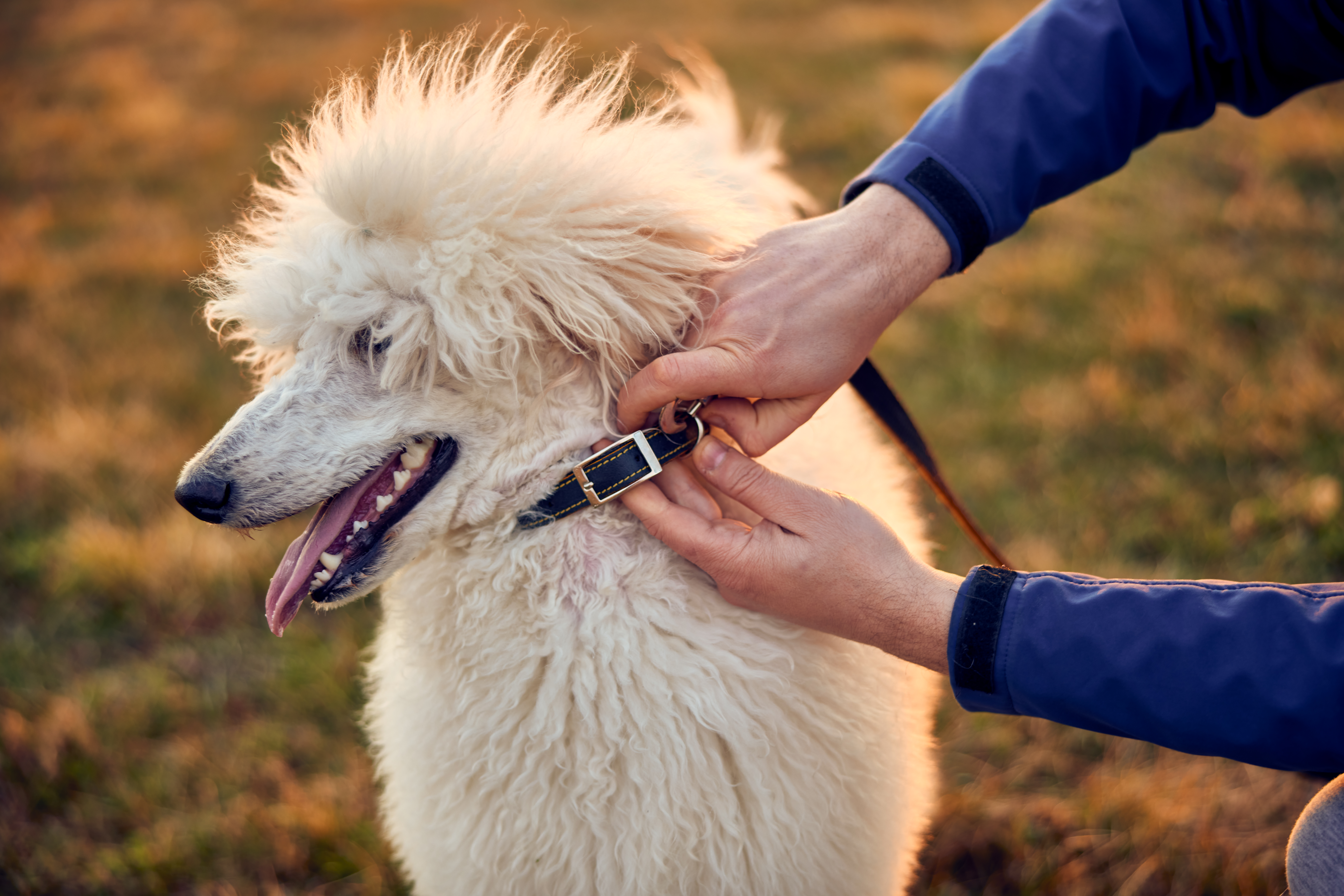
Quick answer: Collar matting happens when friction, the wrong collar material, and trapped moisture cause your dog's fur to tangle and knot under the band. You can prevent it by choosing a smooth, low-friction collar, ensuring a proper fit, removing the collar indoors, and brushing the neck area regularly.
Ever slipped off your pup's collar and discovered a sad little ring of flattened, tangled fur underneath? You're definitely not alone—it's one of the most common grooming gripes among owners of fluffy, long-haired, and double-coated dogs. Some people even affectionately call it the "neck mullet."
Here's the good news: collar matting isn't something you just have to live with. It's almost always preventable once you understand what's causing it. And it's worth fixing, because matting under the collar isn't only a cosmetic nuisance. Tight mats tug at the skin, trap moisture and debris, and can lead to irritation, hot spots, and even painful sores if left alone.
In this guide, we'll walk through exactly why collars cause matting, which dogs are most at risk, how to prevent it for good, and how to safely detangle any mats your pup already has. Let's give that neck fur the love it deserves.
What Causes Matted Dog Hair Under a Collar?
Collar matting usually comes down to three culprits working together: friction, the wrong material, and trapped moisture. Understanding each one makes prevention so much easier.
How friction creates mats
Every time your dog moves, plays, or shakes, their collar rubs against their fur. That constant rubbing tangles loose hairs together, and over time those tangles tighten into firm, knotted clumps. The neck is a prime "friction zone," right alongside other classic mat hotspots like behind the ears, in the armpits, between the back legs, and around the tail.
Fit plays a huge role here too:
- A collar that's too loose shifts around constantly as your dog moves, spreading friction across a wider patch of fur.
- A collar that's too tight compresses the coat and restricts airflow, which flattens the fur and can lead to bald patches or skin irritation over time.
A simple fix is the two-finger rule: you should be able to comfortably slide two fingers underneath your dog's collar. Any tighter and it's too snug; any looser and it'll slide around and rub.
How collar material affects your dog's coat
Not all collars are created equal when it comes to coat health. Rough, coarse, or textured materials snag on individual hairs with every movement, speeding up tangling and even causing fur breakage.
Some materials are also harder on sensitive skin. According to dogIDs, common collar materials that can trigger irritation or allergic reactions include:
- Nylon, whose synthetic fibers can be harsh on sensitive skin
- Certain metals in hardware, like nickel, zinc, and brass, with nickel being a particularly notorious cause of contact dermatitis
- Synthetic fabrics like polyester and polypropylene, which can trap heat and moisture against the skin
Raised stitching and exposed metal edges are sneaky offenders too. Those little ridges catch on hairs and create extra friction points right where you don't want them.
How trapped moisture makes matting worse
Moisture is matting's best friend (and your dog's worst enemy here). A damp collar—after a rainy walk, a swim, or a splashy drink—becomes rougher and clings to the fur, which dramatically speeds up tangling. Worse, synthetic materials that trap moisture and warmth create a cozy environment for bacteria and yeast, which can turn a simple tangle into a genuine skin issue.
Which Dogs Are Most Prone to Collar Matting?
Any dog can develop collar matting, but pups with long, fine, or double-layered coats are far more vulnerable because their fur tangles so easily under friction. Breeds that commonly struggle with collar matting include:
- Cocker Spaniels
- Golden Retrievers
- Border Collies
- Rough Collies
- Shetland Sheepdogs (Shelties)
- Cavalier King Charles Spaniels
- Bernese Mountain Dogs
- Irish Setters
- Goldendoodles and Labradoodles
- Any breed with a thick ruff or mane around the neck
Short-haired sweethearts like Labradors, Boxers, and Whippets are much less likely to mat. That said, even smooth-coated dogs can develop fur thinning and irritation if their collar fits poorly or is made from a rough material.
How Do You Know If Your Dog Has Matted Fur?
Mats can hide under all that fluff, so it pays to check regularly (cuddle time is perfect for this!). Watch for these signs, courtesy of the grooming pros at Barkbus:
- Tightly tangled clumps: Firm, bumpy patches that are tough to separate by hand.
- Sensitivity or pain when touched: If your dog flinches, pulls away, or grumbles when you touch their neck, a mat could be the culprit.
- Licking or chewing one spot: Obsessive nibbling is your dog's way of saying something's bugging them.
- Redness, swelling, or odor: Inflamed skin or an unpleasant smell can signal irritation or a secondary infection that needs attention.
If you notice significant hair loss, persistent redness, or any broken skin, it's worth a chat with your vet—these are signs the collar is causing a real problem.
How Can You Prevent Collar Matting?
Prevention is genuinely the easiest, kindest, and most affordable approach. Here's how to keep that neck fur silky and tangle-free.
Choose a smooth, low-friction collar
The single biggest change you can make is switching to a collar made from a smooth material that glides over fur instead of catching on it. Gentle, coat-friendly options include:
- Smooth-lined fabric collars, such as those lined with tightly woven cotton, which sits softly against the fur without snagging
- Biothane, a coated webbing that's smooth, waterproof, hypoallergenic, and naturally low-friction—a fantastic pick for active dogs and swimmers
- Leather, a breathable, generally hypoallergenic material that softens and molds to your dog's neck over time
- Hemp, a durable, eco-friendly, naturally antimicrobial option
Whatever you choose, look for collars where the hardware sits flush with the material, and skip anything with raised stitching or rough edges.
Get the fit right
Remember the two-finger rule, and recheck the fit every few months—especially for puppies who are still growing. A collar that fit perfectly at six months can be too snug by your dog's first birthday. Coats also change with the seasons, so double-coated breeds may need adjustments in spring and fall when they shed heavily.
Give your dog collar-free time indoors
Letting your dog go collar-free at home (especially overnight) gives their fur a chance to recover and slashes the total hours of friction. As a bonus, it removes the small risk of a collar snagging on furniture or a playmate. Just pop the collar back on before heading outside, since dogs typically need visible ID in public.
Build a simple grooming routine
A quick brush around the neck a few times a week works wonders, with extra attention paid directly under the collar and along its edges. Match your overall brushing frequency to your dog's coat type:
- Curly or wavy coats: daily
- Long and straight coats: every 2–3 days
- Medium-length coats: 2–3 times a week
- Short-haired coats: weekly
- Double coats: several times a week
Keep the collar clean and dry
Always dry a wet collar before putting it back on, or switch to a quick-drying Biothane collar. Wash fabric and leather collars regularly with mild soap and warm water, then let them fully air dry. Rotating between two collars is a clever trick too—it lets each one dry out completely and spreads pressure across slightly different spots.
How Do You Safely Detangle Mats Around the Neck?
Found a mat already? Don't panic. Mild to moderate tangles can usually be handled at home with patience, the right tools, and plenty of treats.
Your detangling toolkit:
- Dog-safe detangling spray or conditioner
- A slicker brush
- A dematting comb or rake
- Blunt-tipped grooming scissors (for visible mats only)
- A non-slip surface
- Lots of treats and praise
Step 1: Set the scene
Pick a quiet, well-lit spot and keep things calm with a soothing voice and treats at the ready. A relaxed pup makes everything easier.
Step 2: Soften the mat
Spritz a dog-safe detangler directly onto the mat and let it sit for a few minutes. Always work on dry fur—wet mats tighten up and become much harder to remove. For a gentle home remedy, a little coconut oil or a sprinkle of cornstarch can also help loosen things up.
Step 3: Work it out gently
Start brushing from the outer edge of the mat, never the center, and hold the fur close to the skin to minimize tugging. Use short, gentle strokes with your slicker brush or dematting comb, and take treat breaks as needed. Never yank a mat from the root—it's painful and can break the skin.
Step 4: Use scissors only with caution
If a mat truly won't budge, use blunt-tipped grooming scissors and cut parallel to the skin—never across or underneath. If the mat is tight against the skin, please don't risk it. That's a job for a professional.
When to call a professional groomer
Skip the DIY and book a pro if:
- The mats are thick, tight, or widespread
- Your dog is in pain or frightened
- A mat is pressed right against the skin
- You're simply not sure how to proceed safely
Groomers have the tools and training to remove mats without hurting your pup, and they can spot skin issues early too.
Keep That Neck Fur Happy and Healthy
Collar matting may be common, but it's wonderfully easy to prevent once you know the playbook. Choose a smooth, well-fitting collar, give your dog regular collar-free time at home, keep the collar clean and dry, and build a quick brushing routine into your week. Tackle small tangles early and gently—and never hesitate to call in a pro for the stubborn ones.
Your dog can't tell you their collar's bugging them, but a comfy neck and a tangle-free coat speak volumes. Take a peek under your pup's collar today, and if you spot trouble, book a grooming session or rethink your collar choice. Their fur (and their happy wiggle) will thank you!
Frequently Asked Questions
Should my dog wear their collar indoors?
It's generally a good idea to remove your dog's collar when they're home and supervised. This gives the coat a break from constant friction, lowers the risk of matting, and removes the small chance of a collar snagging on furniture or another pet. Just put it back on before heading outdoors, where ID is usually required.
What is the best collar to prevent matting?
Smooth, low-friction collars are best. Cotton-lined fabric collars and Biothane collars both glide over fur instead of catching on it. Leather and hemp are great natural options too. Whatever you pick, make sure the hardware sits flush and there's no raised stitching.
Can a collar cause bald patches on my dog?
Yes. Over time, a poorly fitting collar or one made from a rough material can cause fur thinning and bald patches around the neck, especially in long-haired breeds and dogs that wear their collar 24/7. Switching to a smoother material and allowing regular collar-free time usually helps the coat recover within a few weeks.
How do I get rid of a mat caused by a collar?
For small mats, work a dog-safe detangler into the mat and gently tease it apart with a wide-toothed comb, starting from the ends and working inward on dry fur. Never pull from the root. For tight mats close to the skin or severe matting, see a professional groomer rather than attempting it at home.
Are certain collar materials bad for sensitive skin?
Some can be. Nylon, certain metals like nickel, and synthetic fabrics like polyester can trigger irritation or contact dermatitis in sensitive dogs. Hypoallergenic options such as Biothane, leather, cotton, and hemp are gentler choices, and rotating collars helps prevent constant pressure in one spot.