

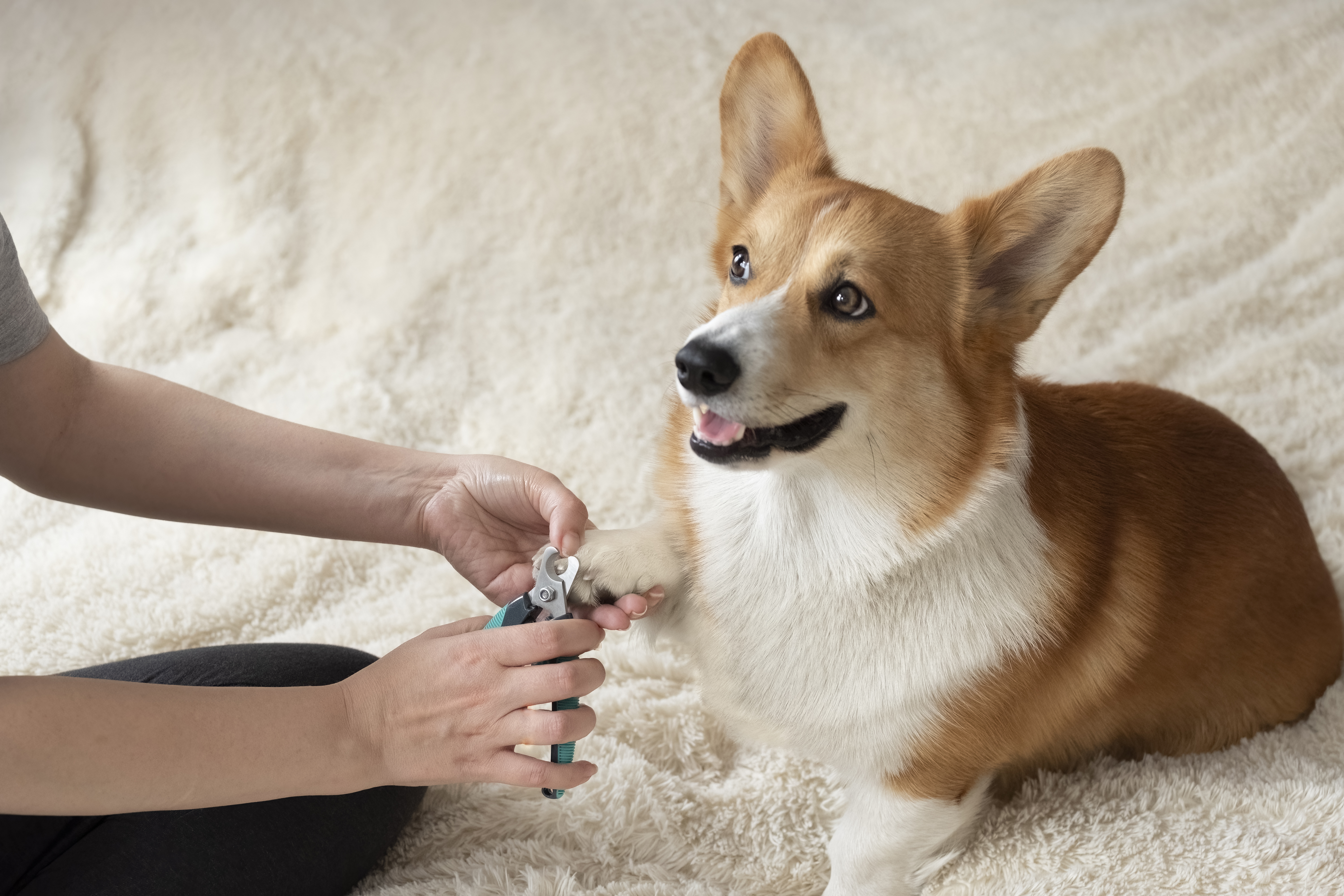
Regular nail trims are an important part of your dog’s health and comfort. When a dog’s nails get too long, they can press into the ground, change how the paws sit, and make walking or running uncomfortable. Long nails can also slip on smooth floors, crack, snag, or grow toward the paw pad.
Keeping your dog’s nails at a healthy length helps support better posture, safer movement, and happier paws. With the right tools and a calm approach, nail trimming can become much less stressful for both you and your dog.
Why Dog Nail Trimming Matters
Healthy nails should not force your dog’s toes upward or press hard into the floor. If you hear clicking when your dog walks on hard surfaces, the nails may be too long.
Regular nail care can help prevent:
- Painful nail cracks or breaks
- Slipping on tile, wood, or laminate floors
- Paw and toe discomfort
- Changes in posture or gait
- Trouble walking, running, or climbing stairs
- Overgrown quicks that make future trims harder
Most dogs need nail trims every 3 to 6 weeks, though some may need them more often depending on activity level, age, and how fast their nails grow.
Essential Tools for Cutting Dog Nails
Before you begin, gather everything you need. Being prepared helps the process go faster and keeps you calm if your dog gets nervous.
Dog Nail Clippers
Choose a clipper made for dogs, not human nail clippers. The two most common types are:
- Scissor clippers: Best for medium to large dogs or dogs with thick nails.
- Guillotine clippers: Often useful for small to medium dogs, but placement must be precise.
Make sure the blades are sharp. Dull clippers can crush or splinter the nail.
Nail Grinder
A grinder files the nail down slowly and can smooth sharp edges after clipping. It may be helpful if you are nervous about cutting too much at once.
Use short touches with the grinder and keep it moving. Holding it in one place can create heat and discomfort.
Styptic Powder
Styptic powder helps stop bleeding if you accidentally cut the quick. Keep it open and nearby before you start.
Treats
Use small, high-value treats to reward calm behavior. Soft treats, tiny pieces of chicken, or cheese can help your dog form a positive connection with nail trims.
Good Lighting
Bright lighting helps you see each nail clearly, especially when checking for the quick. Natural light, a lamp, or a small flashlight can make trimming safer.
How to Cut a Dog’s Nails Safely
Take your time. If your dog gets stressed, stop and try again later. Trimming one or two nails calmly is better than forcing a full session.
Step 1: Choose a Calm Spot
Pick a quiet area with good lighting and a non-slip surface. Your dog should feel steady and secure.
Small dogs may feel comfortable on your lap or a stable table. Larger dogs may do better standing, sitting, or lying down. Choose the position that keeps your dog relaxed and lets you hold the paw safely.
Step 2: Let Your Dog See the Tools
Before trimming, let your dog sniff the clippers or grinder. Reward calm interest with a treat.
You can practice by:
- Showing the tool, then giving a treat
- Touching the tool to the paw without cutting
- Turning the grinder on briefly, then rewarding
- Holding the paw for one second, then rewarding
This helps your dog learn that nail tools are not scary.
Step 3: Hold the Paw Gently
Lift one paw in a natural position. Avoid pulling the leg too far forward or twisting the foot.
To extend the nail:
- Place your thumb on top of the toe
- Place your finger under the paw pad
- Apply gentle pressure
Hold the paw securely, but do not squeeze. If your dog pulls away, pause and let them settle before trying again.
Step 4: Find the Quick
The quick is the sensitive inner part of the nail. It contains blood vessels and nerves. Cutting it can hurt and cause bleeding, so the goal is to trim only the dead outer tip.
Light-Colored Nails
In white or clear nails, the quick often looks pink. Trim only the clear or white tip beyond the pink area. Leave a small buffer so you do not cut too close.
Dark Nails
Dark nails are harder because the quick is not easy to see from the outside. Trim tiny pieces at a time from the tip.
As you cut, look at the center of the nail. At first, it may look dry or chalky. As you get closer to the quick, you may see a darker center or a small gray, black, or oval spot. Stop there.
With dark nails, small and frequent trims are safest.
Step 5: Trim a Little at a Time
Place the clipper near the nail tip and remove a small piece. Follow the natural curve of the nail instead of cutting a large section straight across.
If using a grinder, touch it to the nail for one or two seconds, then pull away and check your progress.
Go slowly if:
- Your dog has dark nails
- The nails are overgrown
- Your dog is nervous or wiggly
- You are unsure where the quick begins
Step 6: Reward Often
Give a treat and praise after each nail, or even after each small step. You do not need to finish every nail in one sitting.
For anxious dogs, try:
- One paw per session
- One or two nails per day
- Short practice sessions between trims
- Breaks before your dog gets overwhelmed
Ending on a calm note helps make the next trim easier.
Calming Tips for Anxious Dogs
Many dogs dislike nail trims because their paws are sensitive, the tools make noise, or they had a bad experience in the past. A gentle approach can help build trust.
Use Desensitization
Introduce the process in small steps:
- Touch your dog’s leg, then reward.
- Touch the paw, then reward.
- Hold the paw briefly, then reward.
- Touch the nail with the clipper, then reward.
- Trim one tiny tip, then reward.
If your dog freezes, growls, pulls away, or panics, go back to an easier step.
Watch Body Language
Pause if you notice signs of stress, such as:
- Pulling the paw away
- Lip licking
- Yawning
- Panting when not hot
- Tucked tail
- Pinned ears
- Trembling
- Growling
Set the paw down, offer a treat, and give your dog time to relax.
Stay Calm
Dogs can sense stress. Move slowly, use a soft voice, and avoid scolding or forcing the paw. If either of you gets frustrated, stop and try again another day.
What to Do if You Cut the Nail Too Short
Accidents can happen, even when you are careful. If you nick the quick and the nail bleeds, stay calm.
How to Stop the Bleeding
- Apply styptic powder directly to the nail tip.
- Hold steady pressure for 30 to 60 seconds.
- Avoid checking too soon, which can restart bleeding.
- Keep your dog quiet for a short time after it stops.
If you do not have styptic powder, cornstarch can help temporarily.
Call a veterinarian or professional groomer if the bleeding does not stop after several minutes, the nail is cracked or torn, your dog seems very painful, or they will not put weight on the paw.
Final Thoughts
Cutting your dog’s nails safely takes patience, good tools, and a gentle touch. Trim small amounts, watch for the quick, reward often, and stop before your dog becomes too stressed.
If nail trims feel difficult, or your dog has dark, thick, overgrown, or sensitive nails, Woofie’s can help. Contact Woofie’s for professional grooming support and stress-free nail care.