


Quick answer:
Finding more fur around the house this fall? Many dogs shed more as their coats change with the season. Regular, gentle brushing and a professional bath and brush-out help collect that loose hair. Start with your dog's coat type and a routine you can keep up at home. If you notice bald patches, sore skin, or persistent scratching, call your veterinarian.
You brush your dog, put the brush away, and find another tumbleweed of fur beside the couch. Sound familiar? Fall shedding can leave pet parents in Frisco and McKinney wondering how one dog has quite so much hair to spare. Let's walk through what's happening, how to make brushing easier, and where mobile pet grooming fits into your dog's fall coat care.
Why Some Dogs Shed More in Fall Than Others
Shedding is how dogs replace old or damaged hair. Changes in daylight and temperature help signal those seasonal coat changes. The American Kennel Club's guide to dog shedding explains that spring and fall are often the busiest shedding seasons. Other dogs keep us reaching for the lint roller throughout the year.
A double coat has two layers: a soft undercoat beneath the protective outer hairs. When loose undercoat starts coming out, it can fill a brush surprisingly quickly. Indoor lighting, heating, and air conditioning also influence the shedding pattern. Here in North Texas, a warm fall can mean the loose fur sticks around longer than you expected. Watch how your dog's coat changes over the weeks, rather than waiting for one cool morning to settle things down.
Which Breeds Feel Fall Shedding the Most?
Golden Retrievers, Australian Shepherds, Corgis, Huskies, and Shelties all have double coats that can leave plenty of loose undercoat behind. If you share your home with one, you probably know the familiar collection spots: the dog bed, the back seat, and whichever pair of pants you just put on. Even a shorter coat can produce an impressive amount of fur.
For mixed-breed dogs, look at the coat in front of you. Is it short and smooth, long and feathery, or thick enough that your fingers have to work through several layers? That gives you a useful place to start when choosing a brush. Your groomer can help identify the coat type and show you where loose hair tends to collect, including areas that are easy to miss during a quick brush-over.
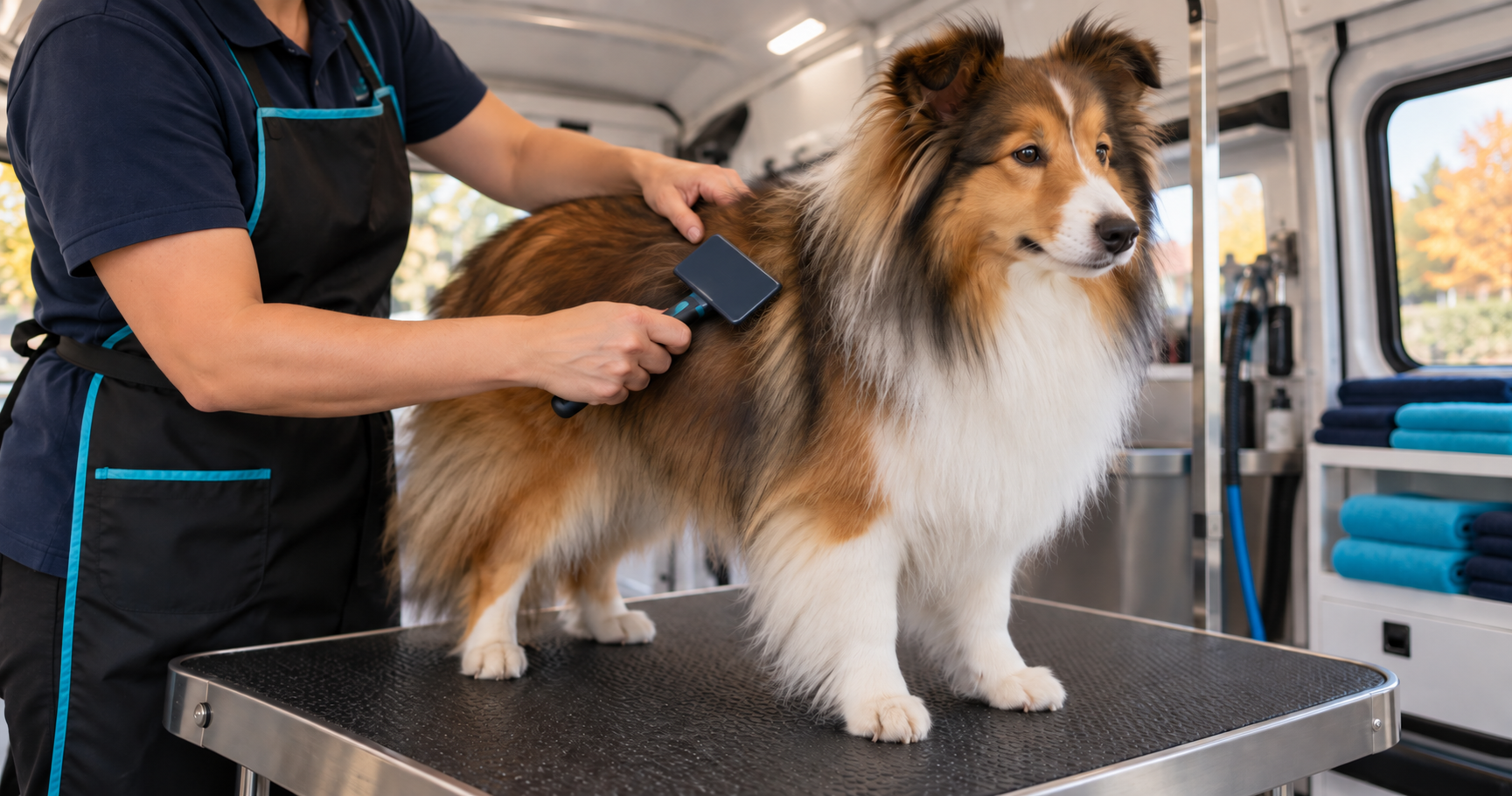
How Should I Brush My Dog During Fall Shedding?
Start with a brush that suits your dog's coat. If you're staring at a shelf full of grooming tools, ask your groomer which one to choose and how to use it. A quick demonstration of the grip, pressure, and direction makes home brushing much easier. Bring the brush you already own so you can learn with the tool you'll actually be using.
For a smooth, short coat, try a grooming glove or a suitable bristle brush. Keep your touch gentle and your sessions short. Choose a quiet moment when your dog is settled, and work through one area at a time. A little regular attention helps gather loose hair before it spreads around the house.
For longer or thicker double coats, a suitable slicker brush and comb help you work through small sections. Follow the direction the hair grows and use light pressure. Pay attention to places where hair rubs together, such as behind the ears and beneath the collar. Stop at a tight tangle or any sign of discomfort, and ask your groomer for help. Get a demonstration before trying a bladed deshedding tool.
During a heavy shed, several short brushing sessions a week are a useful starting point. Some heavy shedders benefit from daily attention while the loose undercoat is coming out. Keep each session comfortable, then build a routine you and your dog can stick with. Our guide to how often dogs need grooming explains how home brushing fits around professional appointments.
Clear the brush as you go, take breaks, and finish while your dog is still comfortable. You don't need to keep going until every pass comes back clean. If your dog starts getting restless, put the brush down and come back to it later. A few calm minutes are easier to repeat than one long session that leaves you both frustrated.
How Does Professional Grooming Help With Shedding?
A thorough bath, dry, and brush-out helps lift loose undercoat before more of it ends up on your couch. Drying and brushing work through the coat to release hair that has collected beneath the surface. You'll still see some shedding afterward, but removing that loose hair gives you a more manageable coat to care for at home.
At Woofie's of Frisco-McKinney, we bring the mobile spa to your home. Tell us how much your dog is shedding, what brushing is like at home, and whether they have any skin sensitivities. Those details help us talk you through a bath and brush, deshedding, or another grooming service. We'll help you understand the recommended service and what it includes before the appointment.
After the visit, keep up with gentle brushing and ask which areas deserve extra attention. Bathing too often can dry the skin and coat, so talk with your groomer about a sensible bathing schedule. Between visits, notice how easily the comb moves through the coat and where loose hair starts building up again. That gives you something useful to discuss when planning the next groom.
Does Cutting the Coat Shorter Help With Shedding?
A shorter haircut leaves shorter hairs around the house, but it doesn't stop shedding. For double-coated dogs, brushing out loose undercoat is usually the better place to start. The AKC's double-coat grooming guidance explains why shaving away the protective outer coat can expose the skin to sun and affect how the hair grows back.
If your dog's coat is heavily matted, talk with your groomer about the most comfortable way to handle it. A shorter cut may be needed in that situation, or for a veterinary reason. For the everyday fall fur collecting on your floors, ask about brushing and deshedding before requesting a close shave.
When Should I Call a Veterinarian Instead of a Groomer?
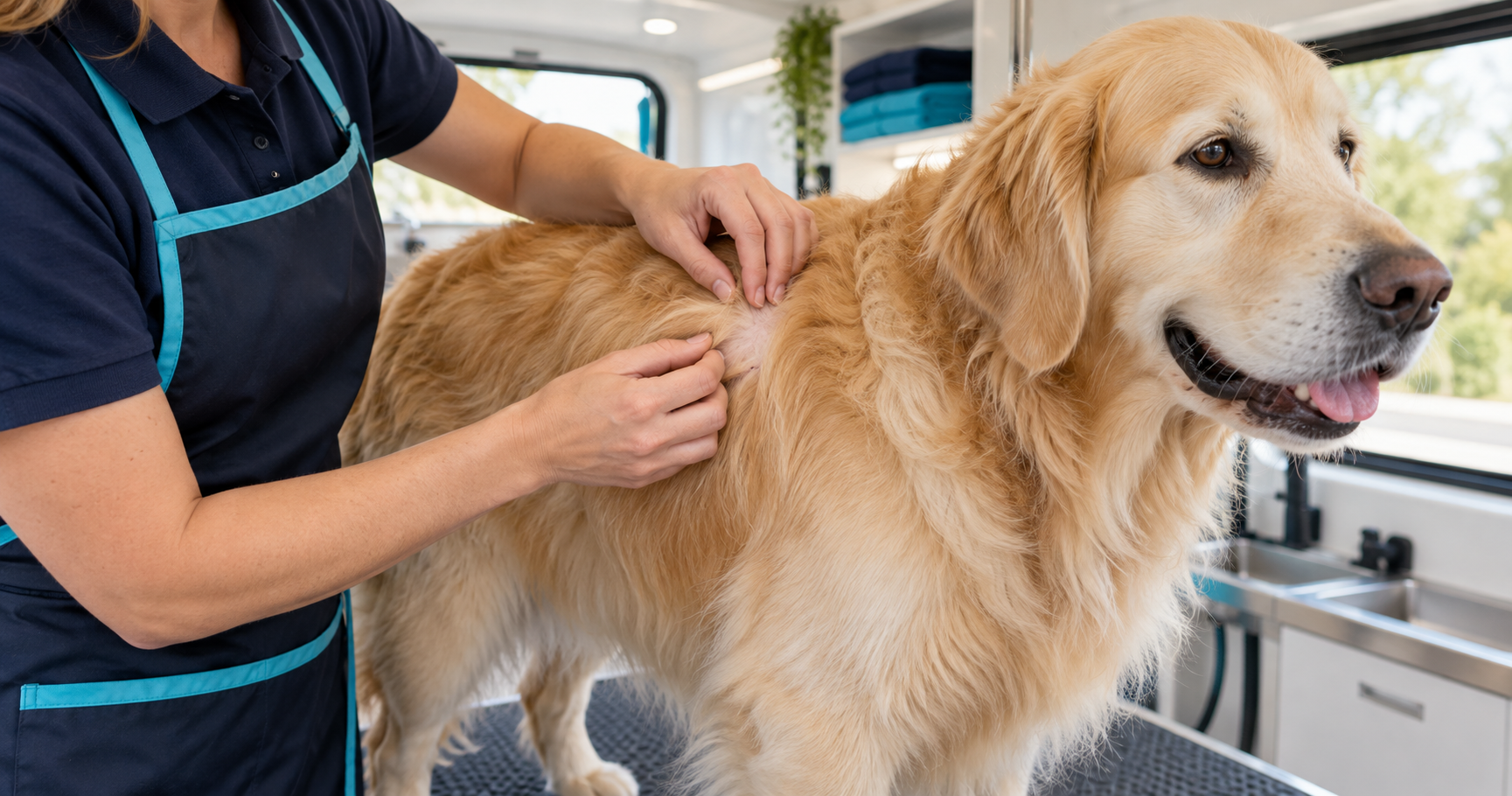
Call your veterinarian if you see bald patches, unusual thinning, red or sore skin, persistent scratching, or a sudden change in hair loss. The Merck Veterinary Manual explains that hair loss can have several causes that need a veterinarian's attention. Our team can point out coat changes during grooming; your veterinarian is the right person to find out what's causing a skin or hair-loss problem. If your dog seems uncomfortable, make that call before the next groom.
A Fall Coat Checklist for Frisco and McKinney Pet Owners
Before you put the brush away, take a moment to check the areas you've worked through. Did the brush glide comfortably? Were there spots your dog wanted you to leave alone? Keep track of those details for your next appointment. Have your brush handy, make time for short sessions, and check the coat after outdoor play for leaves or debris caught in the fur. Small habits are easier to keep up than a big weekend grooming project.
Explore our local pages for pet care in Frisco and pet care in McKinney. Woofie's of Frisco-McKinney also serves Prosper, Melissa, and Fairview. Share your address when you reach out, and our team will help you plan care for your dog at home.
Frequently Asked Questions
Why does my dog shed more in fall than in summer?
Fall coat changes help prepare seasonal shedders for colder weather. As older hair comes out, you'll notice more on the brush and around the house. Dogs that shed all year can also have a heavier stretch in fall.
Do all dogs shed twice a year?
No. Some dogs have a bigger shed in spring and fall, while others leave a steady trail of hair throughout the year. Coat type and the dog's living environment both play a part. Getting familiar with your dog's pattern helps you know when to add a little more brushing.
Will shaving my double-coated dog stop the shedding?
No. Shaving changes the length of the hair, not the shedding cycle. Ask your groomer about removing loose undercoat with bathing, drying, and brushing. If matting is the concern, discuss that separately so the groomer can recommend a comfortable approach.
How often should I brush my dog during a heavy fall shed?
Try several short, gentle sessions a week during a heavy shed. Some coats need daily attention at the peak. Ask your groomer to show you the right technique for your brush, and take a break when your dog has had enough.
When should I see a veterinarian instead of a groomer about shedding?
Call your veterinarian for bald patches, irritated skin, persistent scratching, or a sudden unexplained change in hair loss. Those signs deserve a closer look, even during shedding season.
Final Thoughts
Fall shedding is easier to handle when you have a routine that fits into everyday life. Keep the right brush nearby, spend a few quiet minutes working through the coat, and notice which spots need a little help. You don't have to solve every tangle or grooming question on your own. Tell your groomer how brushing is going, where fur is collecting, and what your dog finds comfortable. That's a helpful starting point for choosing care that makes the next few weeks easier for both of you.
Need a hand with the fall fur? Reach out to Woofie's of Frisco-McKinney and tell us a little about your dog, their coat, and their last groom. Our team will help you choose a mobile grooming service and talk through care between visits. New clients can get started with our service request form; existing clients can request their next visit through the client app.