


Quick Answer:
Your dog needs a plan that covers bathroom breaks, meals, exercise, and time with a person throughout your trip. A visit count alone cannot tell you whether those needs are covered. Start with the time your dog can comfortably spend alone, review every gap across a full day and night, and arrange visits or longer stays around that routine.
What This Guide Covers
Your dog still expects breakfast, a walk, and company when the suitcases come out. Planning in-home pet sitting visits starts with those familiar parts of the day.
For pet parents in Frisco and McKinney, this means looking beyond the dates on a flight reservation. The schedule needs to work from the moment you leave home until someone is back to care for your dog.
Key Takeaways
- Review every period your dog will be alone, including overnight.
- Plan visit length and frequency around meals, bathroom breaks, activity, and company.
- Confirm daytime coverage separately from in-home overnight sitting.
- Arrange a backup plan for travel delays before leaving.
How many visits will your dog need?
Start with an ordinary day at home. When does your dog first go outside, eat, walk, and settle for the evening? Include the less obvious company they get while you work nearby or relax at home. Those everyday details help you and your sitter decide how much care to arrange.
The RSPCA advises leaving dogs alone for no longer than four hours, while noting that individual needs vary. That is general animal-welfare guidance, not a guarantee that every dog can manage four hours or our team's scheduling policy.
Think about what changes when everyone leaves for a vacation. A dog who usually naps beside someone during the afternoon will lose that company, even if meals arrive on time. Tell the sitter what being home normally looks like so the conversation includes companionship as well as practical tasks.
Why does the gap between visits matter?
Look at both arrival and departure times. A morning visit and an evening visit can still leave a long stretch alone in between, followed by another long stretch overnight.
For example, if a sitter leaves at 8 a.m. and returns at 6 p.m., your dog is alone for ten hours. Extending the morning visit slightly does little to address the middle of that gap. A separate care period may be needed.
What should each visit make time for?
Write down what your dog needs and ask how much time those tasks will take. Meals, fresh water, a bathroom break, a walk, and quiet company all need room in the plan. Allow for your dog's pace, including a slow eater or a dog who takes time to settle with a sitter.
Explain the order your dog is used to: perhaps a bathroom trip comes before breakfast, followed by a walk and a chance to settle. Share feeding directions and where the usual supplies are kept. This helps the sitter understand the work involved when you discuss visit length.
If walking is part of your dog's usual day, ask how dog walking visits can fit into the care schedule. Confirm whether the planned sitting visit already includes the walk your dog needs before adding another service.
When should you consider in-home overnight sitting?
In-home overnight sitting means a sitter stays in your home for an agreed overnight period. It may suit a dog who is accustomed to having someone nearby at night. Ask about in-home overnight sitting and confirm arrival times, departure times, and any periods when the sitter will be away.
Describe bedtime as well as the morning routine. Let the sitter know where your dog normally sleeps, when they last go outside, and what usually happens when the household wakes up. Then discuss who will handle daytime care, since an overnight booking does not automatically provide daytime visits or continuous supervision.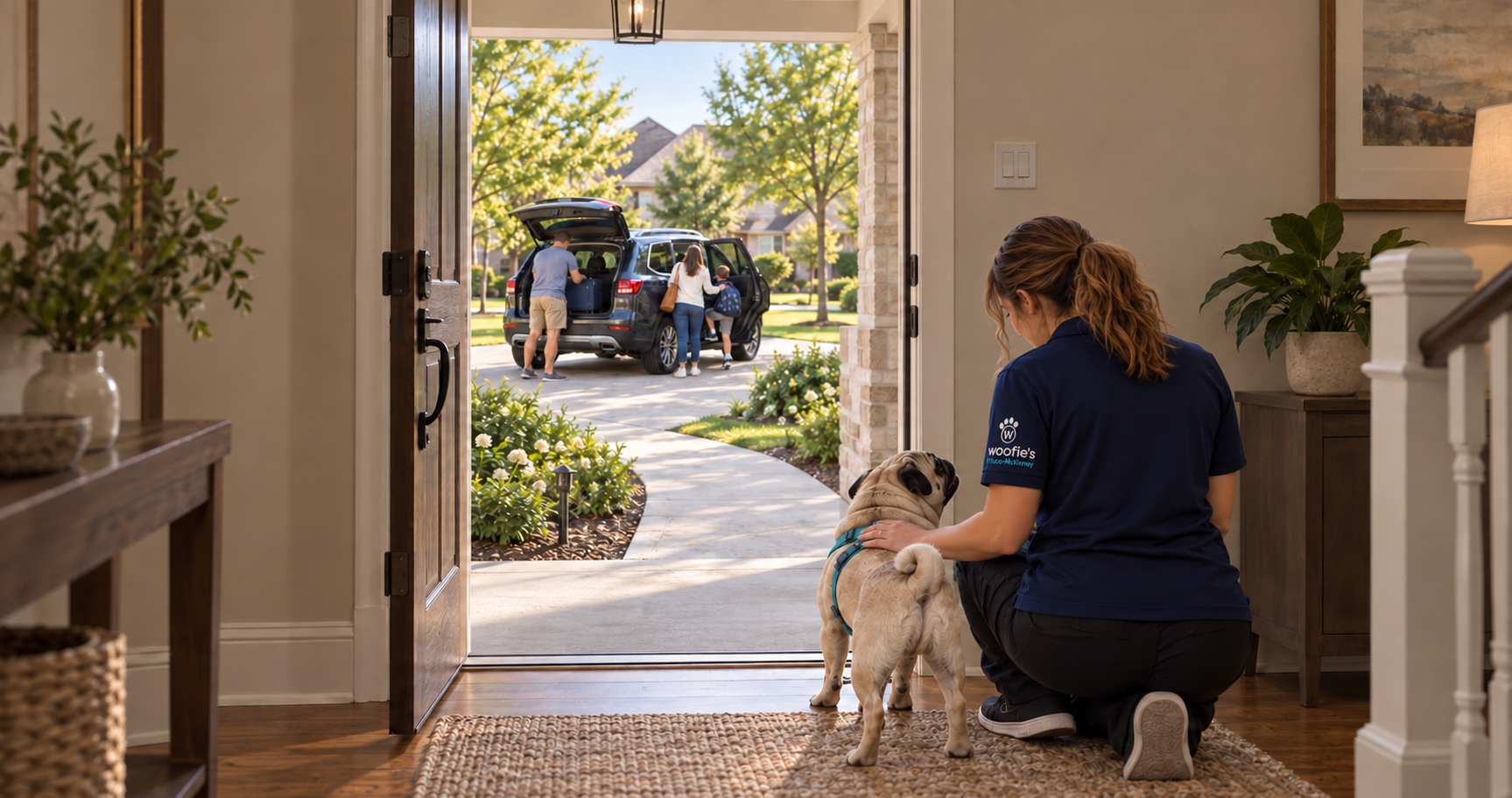

If your dog becomes distressed when left alone, speak with your veterinarian before choosing the arrangement. The ASPCA explains that separation-related distress can begin within minutes and that similar behaviors can have other causes. A sitter can provide company and follow a care plan, but separation anxiety needs guidance from a veterinarian or qualified behavior professional.
For a puppy, a senior dog, or a dog with health needs, share the current routine and any veterinary instructions. Ask the care provider to confirm which tasks they can accept and when another level of support is needed.
How can you plan for a delayed return?
Give your sitter the time you expect to leave home and the time you expect to walk back through the door. A flight's landing time does not include collecting bags or the drive home from DFW.
Before leaving, agree on how to request extra care, who can authorize it, and who can help if the sitter cannot extend the booking. Decide how you will communicate if you are in transit and difficult to reach. Give the agreed backup contact the information they would need to help. An additional evening visit and care through another night are different requests, so discuss both possibilities before you leave.
What would this look like for a Frisco family?
Imagine a Frisco household planning a week away, with a return flight landing at DFW at 9 p.m. Their dog usually has a morning walk, breaks during the day, and company in the evening.
They first map those needs, including overnight company, with their care provider. They arrange evening care on the return date because they will still be traveling during their dog's normal dinner and walk time. They also agree on whom to contact if the flight is delayed until the next day.
In this hypothetical example, the family shares the same departure and return details with everyone involved in care. A McKinney household taking a road trip can do the same, updating the sitter when its expected arrival changes rather than waiting until the original booking ends.
How does your trip change the care your dog needs?
Find the row that most closely matches your time away, then read across to the care needs and questions to discuss. The final column highlights details that can be easy to overlook. A workday absence centers on the hours you are normally out; an overnight trip also brings bedtime and morning care into the conversation.
Use the comparison to prepare for a conversation with your sitter. More than one row may apply to your plans.
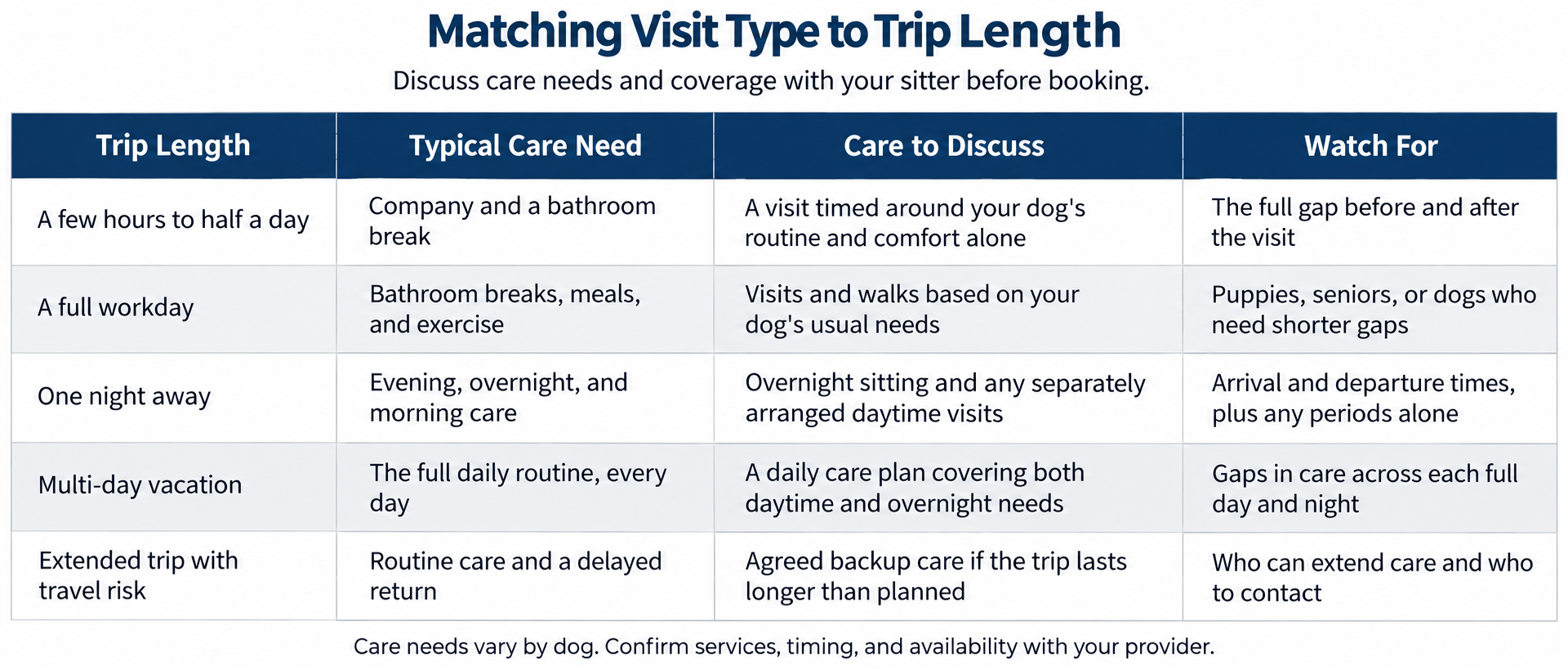
For example, a weekend away might start with a full workday before an evening departure. You may need care during that first afternoon as well as the nights you are away. Describe the whole trip when making your request, including any time away from home before the travel itself begins.
Frequently Asked Questions
How often should a pet sitter visit my dog?
Use your dog's normal day as the starting point: how often they go outside, when they eat, and when they usually have company. Share those details with the sitter to work out visit frequency. Dogs with different ages, activity levels, or comfort alone may need different arrangements.
How does a pet sitter's visit length affect my dog's care?
A visit needs enough time for the agreed tasks without rushing your dog. Tell the sitter about anything that takes extra time, such as preparing food or helping your dog settle before a walk. Ask what the proposed appointment length allows them to do, including time for attention after the practical tasks.
Why is visit spacing as important as visit count for dogs?
The timing determines when your dog can actually go outside or spend time with someone. Three visits concentrated in one part of the day can still leave a lengthy absence elsewhere. Compare the proposed times with your dog's usual breaks rather than judging the plan by the total alone.
What is the difference between drop-in visits and in-home overnight sitting?
During a drop-in visit, the sitter comes to your home for an agreed period and leaves afterward. In-home overnight sitting includes staying in your home for an agreed overnight period. Ask which arrangement fits your dog's evening and sleeping routine, and clarify the hours each option covers.
How far in advance should I book pet sitting for a vacation?
Contact your provider once your travel dates are known so there is time to discuss your dog's needs and meet the caregiver. Ask about availability for your dates and confirm the booking. An inquiry by itself does not reserve care.
Is in-home pet sitting a good fit for anxious or senior dogs?
It may be an option, depending on the dog's routine and the care available. For a senior dog, share mobility needs and veterinary instructions and confirm which tasks the sitter can accept. If your dog becomes distressed when left alone, speak with your veterinarian before choosing the arrangement; extra visits or an overnight stay are not a treatment for separation anxiety.
What happens if our flight is delayed and we return home late?
Send your sitter your revised expected arrival time as soon as you know it. Ask them to confirm any added care rather than assuming a message extends the booking. If they cannot continue, contact the person you arranged as backup and make sure the handoff is understood.
How often should a pet sitter visit your dog during a multi-day trip?
Your dog's everyday needs continue throughout the trip, so agree on a routine that can be followed on each date. Check that the requested visits or overnight stays cover the entire booking. Discuss any differences on the first and last days, when your own presence at home changes.
Are two visits a day enough while I am on vacation?
Two visits alone do not establish that a dog's vacation care is sufficient. For example, breakfast and dinner visits may leave both the middle of the day and most of the night unattended. Consider what happens outside those appointments before deciding whether the arrangement meets your dog's needs.
Is one long visit better than several shorter visits?
Match the visit pattern to the purpose. A longer appointment can allow an unhurried meal, walk, and company; separate visits can provide bathroom opportunities at different times. One does not automatically replace the other. Discuss which needs require time together and which require another return to the home.
Does in-home overnight sitting include daytime visits?
Ask what is included in the specific booking. Daytime visits may need to be arranged separately from the overnight stay. Confirm any morning or evening tasks included before adding other appointments, so you know who is responsible for each part of your dog's care.
Final Thoughts
A well-planned trip leaves your sitter with a clear picture of the dog they will be caring for. Small details matter: the familiar walking route, the food your dog expects, or the way they like to settle after going outside. Sharing those details makes your request more useful than simply asking for a certain number of visits.
You do not need to have every answer before reaching out. Bring your travel plans and describe what a normal day looks like, including anything you are unsure how to cover. That gives the team a starting point for discussing suitable services and timing. Before confirming care, make sure you understand the arrangement and how you will stay in touch.
Planning a trip from Frisco or McKinney? Tell Woofie's of Frisco-McKinney your travel dates, your dog's usual routine, and whether you need daytime visits, overnight care, or both. Request pet sitting for your upcoming trip so our team can discuss available options and the coverage your dog needs before you book.