


Quick Answer:
How often you should groom your dog depends mainly on coat type, coat length, shedding, lifestyle, and home brushing. As a starting point, short or smooth coats may need professional care every 8 to 12 weeks, double coats every 6 to 12 weeks, and long, silky, curly, or doodle-type coats every 4 to 8 weeks. These are guidelines, not fixed rules. A groomer can adjust the schedule after seeing your dog's coat, preferred haircut, age, comfort, and current condition.
Introduction
How often should you groom your dog? It is one of the most common questions pet parents ask, and the honest answer is that it depends on the dog's coat, haircut, lifestyle, and the season. Grooming is more than a haircut. It may include brushing, bathing, nail care, ear care, and, for many coats, a professional trim on a regular schedule. For pet parents in Frisco, McKinney, Prosper, Melissa, and Fairview, warm weather, rain, mud, outdoor activity, and seasonal shedding can also affect what happens between appointments. The right routine helps keep the coat manageable and makes each visit more comfortable for the dog.
Key Takeaways
- Coat type, not breed alone, is the biggest factor in how often a dog needs professional grooming.
- Short- or smooth-coated dogs often benefit from professional care about every 8 to 12 weeks, depending on shedding, activity, and routine care needs.
- Double-coated dogs often benefit from professional care about every 6 to 12 weeks, while long, silky, curly, and doodle-type coats often fall around every 4 to 8 weeks.
- Consistent brushing with the right tools helps prevent tangles and matting between professional visits.
- North Texas weather, outdoor activity, and seasonal shedding can change the amount of care a dog needs between appointments.
- A mobile, one-on-one appointment can make a consistent routine easier for anxious, senior, large, or hard-to-transport dogs.
What Determines How Often a Dog Needs Grooming?
Coat type is one of the main factors in how often a dog needs professional grooming, along with coat length, age, activity, home brushing, and the local climate. A short-haired Labrador and a curly-coated Doodle can live in the same McKinney neighborhood and need different routines because their coats hold loose hair, dirt, and tangles differently.
Our team sees this during mobile pet grooming service. One groomer works with one dog at a time in a climate-controlled van, which allows the plan to be adjusted based on the coat in front of them.
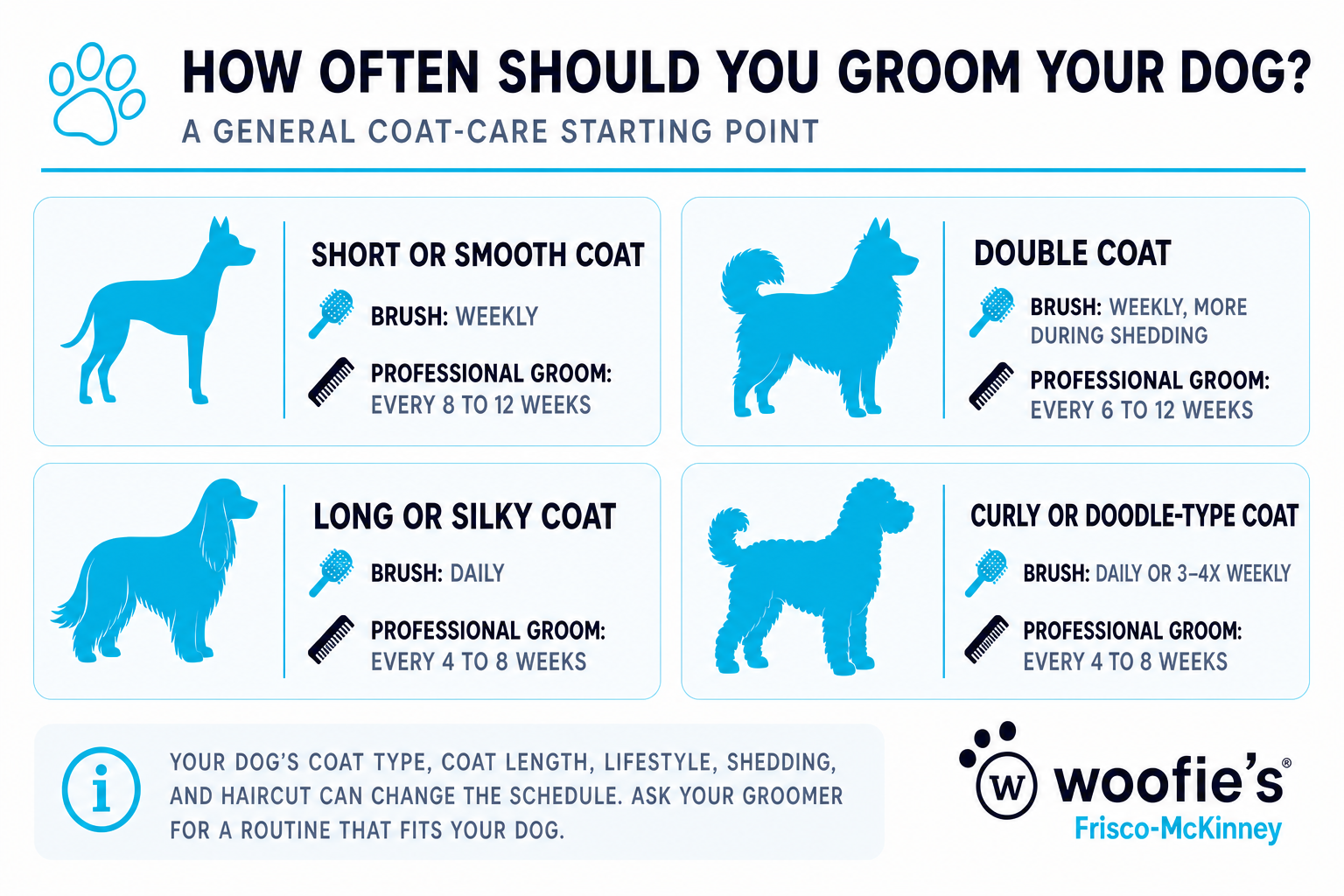
A dog's coat generally falls into one of a few categories, and each one comes with its own rhythm for brushing and professional visits.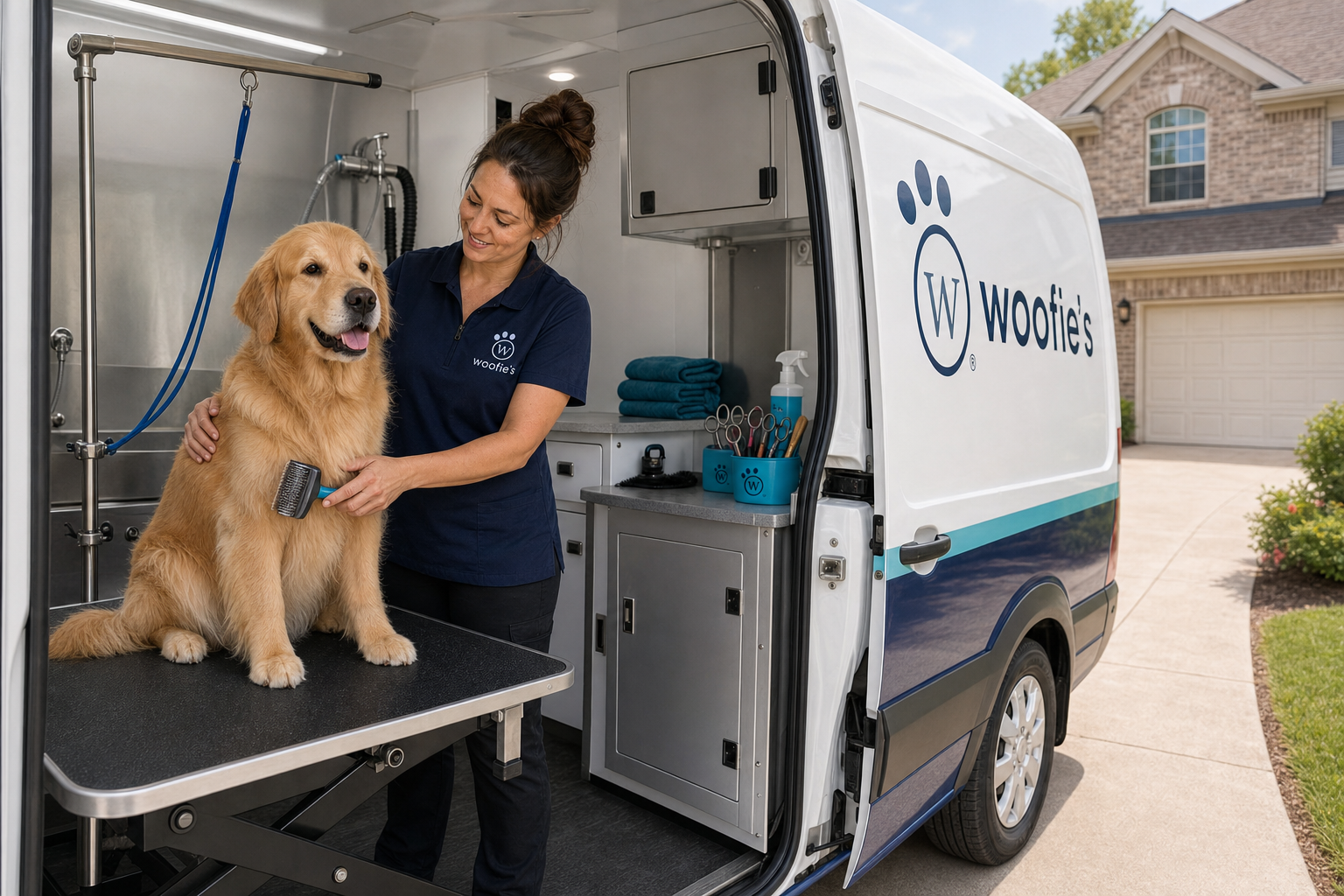
- Short- or smooth-coated dogs, such as Boxers and Labs, shed steadily but rarely mat.
- Double-coated dogs, such as Golden Retrievers, Huskies, and German Shepherds, have a softer undercoat beneath protective outer hairs and may shed heavily at different times of year.
- Long or silky coats, such as Yorkies, Shih Tzus, and Maltese, can tangle easily and often need frequent brushing when kept long.
- Curly and doodle-type coats, such as Poodles, Doodles, and Aussiedoodles, can hold loose hair inside the coat, which makes thorough brushing and combing important for preventing mats.
Age, health, and comfort can also shift the routine. Puppies benefit from short, positive introductions to handling and grooming. Senior dogs may need a slower pace, different positioning, or shorter sessions based on their comfort. Share known health concerns before the appointment, and ask a veterinarian about medical questions.
How Often Should Each Coat Type Be Professionally Groomed?
Most dogs fall somewhere within a professional grooming window of about 4 to 12 weeks. Coat type offers a starting point, but coat length, shedding, activity, home brushing, age, and comfort determine where an individual dog fits within that range.
- Short or smooth coats (Boxers, Labs, and short-haired mixes): brush weekly at home, or more during shedding, and consider professional care about every 8 to 12 weeks for bathing, nail care, and routine coat maintenance.
- Double-coated dogs (Golden Retrievers, Huskies, and German Shepherds): brush at least once a week, often two to three times a week and more during heavier shedding, and consider professional care about every 6 to 12 weeks.
- Long or silky coats (Yorkies, Shih Tzus, Maltese): brush daily or near-daily when kept long, and consider professional grooming about every 4 to 8 weeks, depending on coat length.
- Curly or doodle-type coats (Poodles, Doodles, and Aussiedoodles): brush daily or three to four times a week, based on coat length and density, and consider professional grooming about every 4 to 8 weeks.
Why Do North Texas Seasons Change a Dog's Grooming Schedule?
North Texas weather can change the amount of care a dog needs between appointments, especially for double-coated, long-coated, and curly-coated dogs. Some double-coated dogs shed more heavily during seasonal changes, while others may shed throughout the year in a warm climate. During heavier shedding, extra brushing can help remove loose undercoat before it tangles against the coat.
Warm weather does not automatically mean a dog needs a shorter haircut. Matting can reduce comfort, but the right plan depends on coat type, coat condition, activity, and the dog in front of the groomer. Before requesting a close shave or a major coat change, ask a professional groomer what is appropriate for that specific coat. Questions about heat tolerance, skin, or coat growth should go to a veterinarian when they involve a medical concern.
A dog's outdoor routine also affects coat care between appointments. After hot, dusty, rainy, or muddy outings, check paws and brush debris from the coat before tangles tighten. Families using our dog walking service can share coat and paw-care notes with the team, but grooming frequency should still be based on the individual dog.
What Happens Between Professional Grooming Visits?
Home brushing between visits is an important part of preventing tangles and matting. A curly, long, or mixed-texture coat may tangle before the next professional appointment when loose hair stays trapped in the coat or brushing does not reach below the surface.
A simple at-home routine can cover much of the care a dog needs between visits.
- Brush down to the skin, not just over the top of the coat, using a brush suited to that coat type.
- Check behind the ears, under the collar or harness, in the armpits, around the legs, and near the tail, since friction areas are common places for tangles to begin.
- Wipe paws and bellies after time outside, especially during muddy spring weather or high-pollen days.
- Watch for visible tangles, a coat that is difficult to comb, or nails clicking on hard floors as signs that the routine may need attention. Contact a veterinarian for redness, sores, sudden hair loss, persistent itching, strong ear odor, discharge, or pain.
If a coat becomes heavily matted despite home care, a shorter cut may be the most comfortable option. A groomer can explain the available choices after seeing the coat rather than relying on a general guideline. Mats near irritated or injured skin may require veterinary guidance.
Does a Multi-Pet or Busy Household Need a Different Schedule?
Multi-pet and busy households often benefit from scheduling grooming appointments together without changing each dog's individual coat-based routine. Back-to-back appointments are the usual approach for multiple dogs in one household. Typically, one dog is cared for inside the mobile spa while the next remains comfortably at home until it is their turn. Dogs from different clients are never mixed.
If two dogs in the same home have different coat types, each dog can still follow an individual schedule while the household requests one appointment block. Busy families coordinating grooming, in-home pet sitting visits, and daily walks may find it easier to maintain a routine when pet care comes to the home.
How Do You Choose the Right Grooming Interval for Your Dog?
Choosing the right grooming interval starts with an honest look at your dog's coat type. From there, adjust for lifestyle and routine. Use this short process as a starting point.
- Step 1: Identify the coat type using the categories above.
- Step 2: Start with the general interval for that coat type from the schedule above.
- Step 3: Reassess the routine if your dog swims, plays outside often, sheds heavily, or develops tangles before the next appointment.
- Step 4: Watch for signs such as visible tangles, a coat that is difficult to comb, or nails clicking on hard floors, and ask whether the next visit should move up.
- Step 5: Ask your groomer to confirm the interval after seeing the coat in person. Contact a veterinarian when the concern involves redness, sores, sudden hair loss, persistent itching, discharge, or pain.
The American Kennel Club notes that grooming frequency depends on a dog's breed and coat type and that regular brushing helps control shedding and prevent matting. The right brush and frequency depend on the individual coat.
The ASPCA's dog grooming tips also recommend matching brushing frequency and tools to a dog's coat type.
Pairing that home routine with professional visits that match your dog's coat helps keep the schedule realistic instead of reactive.
Frequently Asked Questions
How often should a Doodle or Aussiedoodle be groomed?
Doodles and Aussiedoodles often benefit from professional grooming about every 4 to 8 weeks because many of their coats hold loose hair and tangle without consistent brushing. Dogs kept in longer or denser coats often need the shorter end of that range and more thorough brushing at home.
How does grooming frequency change between seasons?
Double-coated and curly-coated dogs may need more frequent brushing during heavier shedding or after wet and muddy weather. Rather than changing the calendar automatically, watch the coat and ask a groomer whether home care or the appointment interval should change.
Is it bad to wait longer than the recommended interval between grooms?
Waiting longer can allow tangles, mats, and overgrown nails to become more difficult and less comfortable to address. If the coat is already heavily matted, a shorter cut may be the most comfortable option. Redness, sores, discharge, or pain should be discussed with a veterinarian.
What is the difference between a bath-only visit and a full groom?
A bath-focused service cleans and dries the coat and may include routine care such as brushing, nail care, and ear care, depending on the booked service. A full groom includes the core bath service plus a whole-body haircut. The right choice depends on the coat, desired length, and current condition.
Do senior dogs need a different grooming schedule?
Senior dogs do not automatically need a shorter or longer interval. Their schedule should consider coat condition, mobility, stamina, skin changes, and how they respond to handling. Share known health concerns before the appointment, and involve a veterinarian when the concern is medical.
Can mobile grooming make it easier to stay on schedule?
A mobile, one-on-one appointment may make it easier to stay on schedule because there is no drop-off, waiting period, or car ride. That can be especially helpful for anxious, senior, large, or hard-to-transport dogs.
Which dogs need the most frequent grooming?
Long, silky, curly, and doodle-type coats generally need more frequent professional grooming, often about every 4 to 8 weeks. Short or smooth coats may fall around every 8 to 12 weeks, while double coats may fall around every 6 to 12 weeks. Home brushing, coat length, shedding, and activity can move an individual dog within those ranges.
Final Thoughts
How often you should groom your dog comes down to coat type first, followed by coat length, home brushing, age, activity, comfort, and local weather. Start with the general range for your dog's coat, brush appropriately between visits, and adjust the routine as your groomer gets to know your dog. A consistent schedule helps keep the coat manageable and appointments more comfortable.
Curious How Often Your Dog's Specific Coat May Need Professional Care?
Ask our team at Woofie's of Frisco-McKinney to help you choose a starting point, or see the full breakdown in our complete grooming frequency guide. Call our Frisco-McKinney team at 469-242-0892 or use the website request form to discuss your dog's coat and routine.
Woofie's of Frisco-McKinney is a locally owned, full-service mobile pet care team bringing one-on-one grooming, in-home pet sitting, and dog walking to pet parents across Frisco, McKinney, Prosper, Melissa, and Fairview.