


Quick Answer: The guest room is ready, dinner is planned, and then comes the message: 'Can we bring the dog?' A dog who happily plays with yours at the park may feel differently about sharing a bed, a food bowl, or your attention at home. Before the suitcases arrive, a few decisions can make the visit easier on everyone. At Woofie's of Frisco-McKinney, we help families with in-home pet sitting, walking, and grooming across Frisco, McKinney, Prosper, Melissa, and Fairview. Here's where to start when your holiday guests have four legs, too.
Before guests arrive, agree on where each pet will eat, rest, and spend time apart. Give dogs a gradual introduction outside, supervise shared time, and keep a separate space for resident cats. If sharing the house is uncomfortable for any pet, use separate areas or arrange care elsewhere.
Before you say yes to another dog
A quick conversation now can prevent an awkward arrival. Ask your relatives:
- How does your dog do with other dogs? With cats?
- Does your dog guard food, toys, beds, or a favorite person?
- Is your dog crate trained, and will you bring the crate?
- What does a normal day look like for meals, walks, and bedtime?
- Has your veterinarian recommended any precautions before visiting other pets? Check that vaccinations and parasite prevention are appropriate and current before the trip.
Share your own pets' needs, too. If your cat has never lived with a dog, say so. Ask about any history of chasing or biting before agreeing to host. Picture an ordinary evening with everyone there: can each pet eat, rest, and get outside without an uncomfortable encounter? If the layout of your home makes that difficult, talk through another arrangement before travel plans are settled.
How do you introduce a visiting dog to your resident dog?
Let the dogs meet before the bustle of unloading the car. Start outside, away from your front door, with one adult handling each dog. Choose a quiet stretch of sidewalk where you have room to keep your distance.
Walk in the same direction with loose leashes, without pushing the dogs into a greeting. The American Kennel Club's introduction guidance explains that tension, turning away, and other signs of discomfort mean it is time to increase distance. Watch how both dogs respond before moving closer.
Put away food bowls, toys, and chews before going inside, and keep those first interactions brief. Have separate areas ready so you can end shared time calmly. If either dog remains tense, skip another greeting that day.
Give each pet a place to eat and unwind
Once you're inside, give the dogs a chance to settle rather than expecting them to spend the whole visit together. Even dogs that enjoy playing may want privacy around dinner or a favorite chew.
Feed dogs in separate rooms, remove bowls afterward, and offer chews only while they are apart. Set out familiar bedding and water away from the busiest rooms, and ask guests to leave resting pets alone. Use a crate only if that dog is already comfortable resting in one.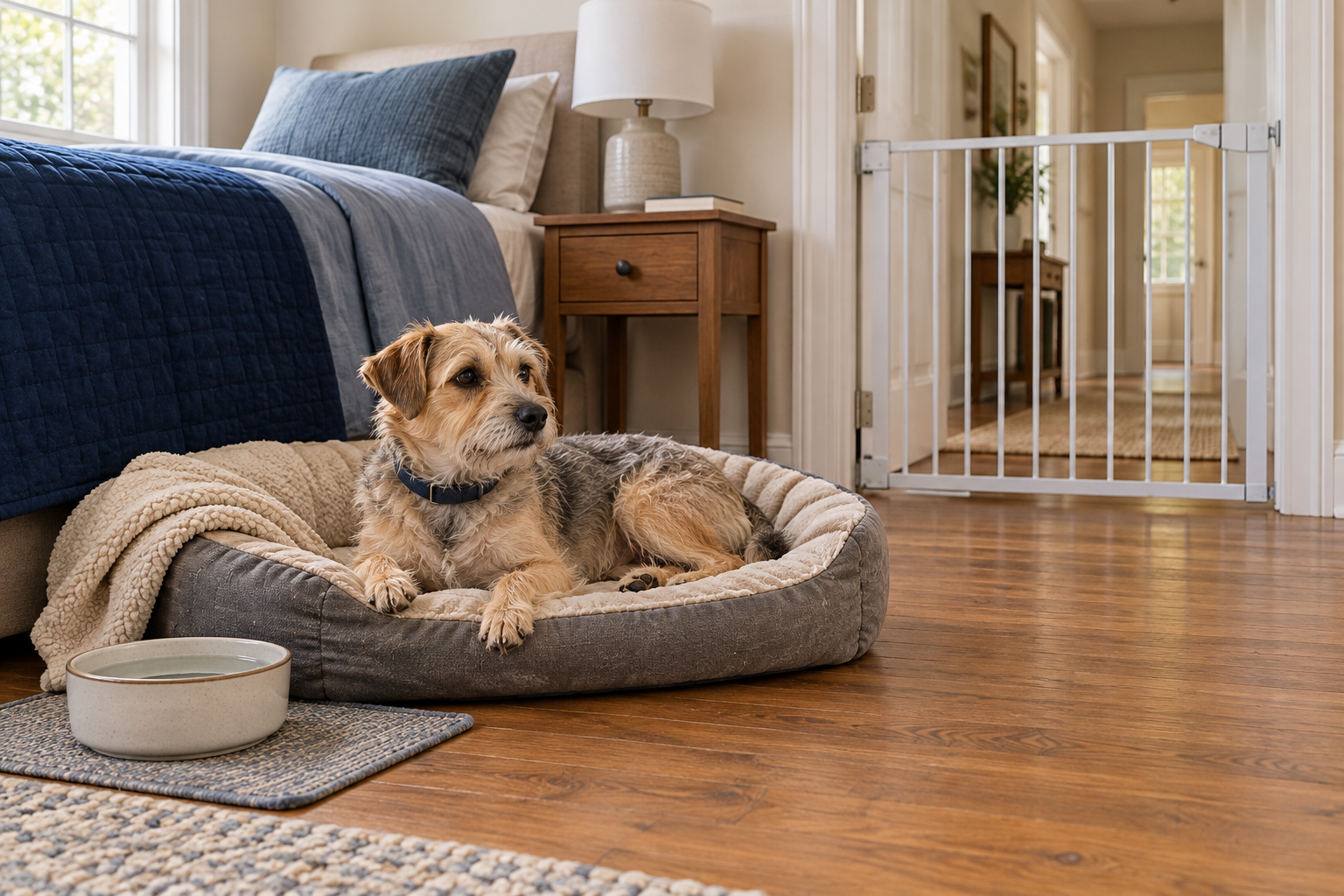
Keep holiday food out of reach, too. The ASPCA's Thanksgiving safety tips cover hazards such as poultry bones, onions, garlic, chocolate, and xylitol. Ask guests to check with you before offering treats, put leftovers away, and secure the trash. Keep bags containing medication out of reach. If you suspect a pet has swallowed something harmful, contact a veterinarian or animal poison-control service immediately, even if the pet seems well.
Decide who is watching the dogs
When everyone is catching up or helping in the kitchen, it's easy to assume someone else is watching the dogs. Decide who has that job whenever they share space, even after a good first afternoon.
The AKC's holiday planning advice recommends assigning an adult to watch the pets. Make that a clear handoff when someone starts cooking or leaves the room. Children should not manage introductions or step between upset dogs.
Secure pets away from the front door before carrying in luggage or welcoming guests, and check that their ID details are current. Separate unfamiliar dogs at bedtime and whenever nobody is watching.
Keeping resident cats and senior dogs comfortable
The visiting dog may be ready to explore, while your cat or older dog would rather keep the afternoon exactly as it was. Make room for both.
Keep the visiting dog out of your cat's usual space. Cats Protection's introduction guidance recommends separate areas and gradual introductions. For a short stay, keeping them apart may be simplest. Your cat needs familiar hiding places, food, water, and a litter box it can reach without passing the dog. A high perch alone does not provide that separation.
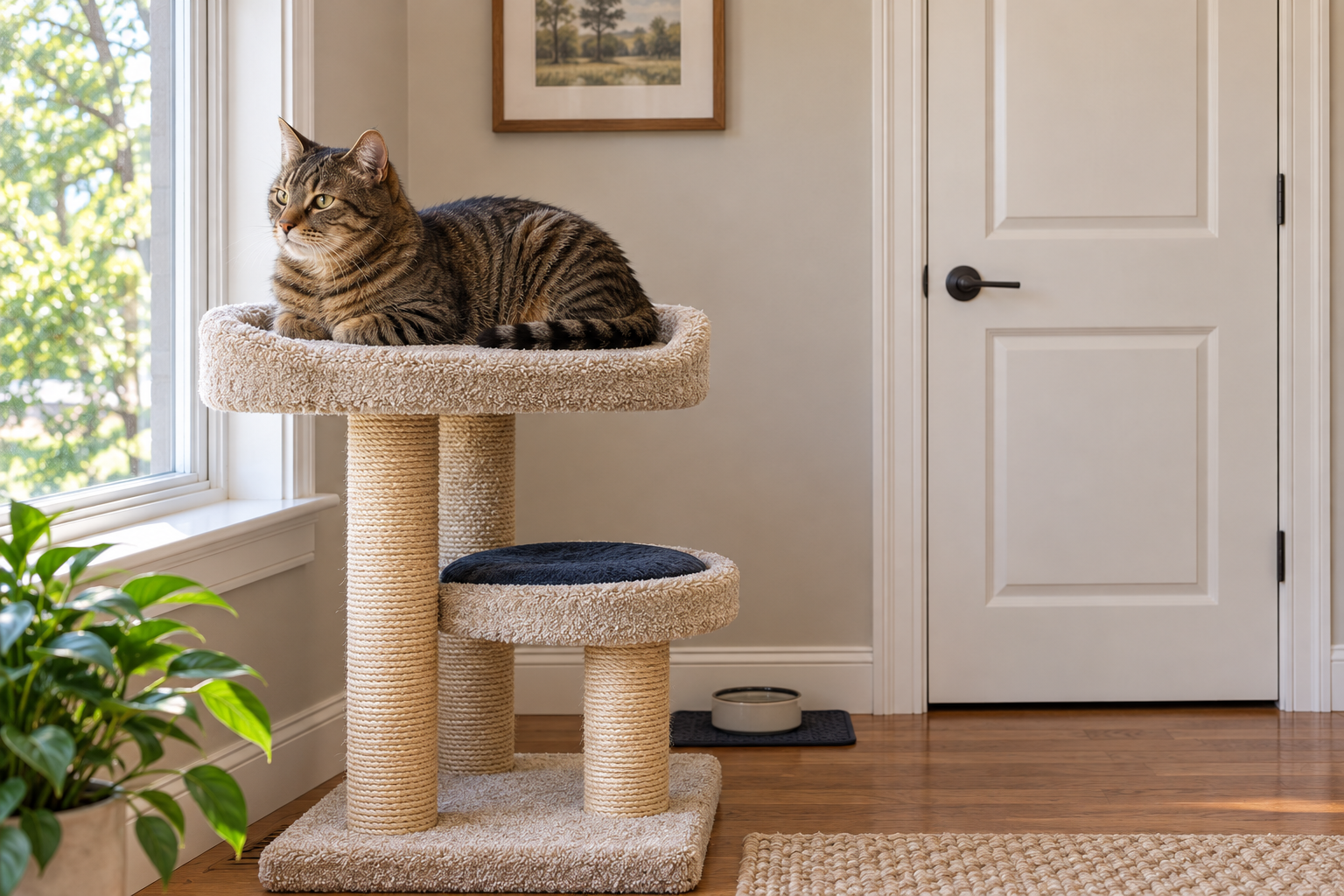
Give your older dog the same consideration. Protect their favorite resting spot and keep energetic visitors from repeatedly approaching. Stick with familiar walks and make time for your usual quiet company. If your dog develops new pain, appetite changes, or unusual withdrawal, call your veterinarian.
Fit pet care around the family plans
Once sleeping spots and introductions are sorted, look at the family calendar. Who handles breakfast when you're doing an airport pickup? Who takes the dogs out while dinner is cooking? A simple note on the fridge with meals, walks, and who's responsible helps prevent a missed walk or a second dinner.
If a long outing will interrupt your dog's routine, ask about walking support before the visit. Our Frisco dog walking service and walks across our service area are tailored to the pet, with a GPS route map in the visit journal afterward. Tell us which pets will be home and how you plan to keep them separated so our team can discuss the visit with you.
If grooming is on the list before family photos, mention that when planning the visit. Some families we work with arrange back-to-back appointments for extended-family dogs at one home. Dogs are typically groomed one at a time while the others stay with their people. Share each dog's needs, the address, and your preferred dates when requesting mobile pet grooming.
What if the pets cannot comfortably share a home?
Sometimes the best plan is for pets to spend the visit apart. Think about what your household can comfortably manage for the whole stay, including meals, bedtime, and trips out.
- Use separate areas. Rotate time with family and bathroom breaks, checking doors and gates before moving pets between spaces.
- Choose another place to stay. A relative's home or pet-friendly accommodation may work better. Check the property's pet rules, including whether a dog can be left alone, before booking.
- Arrange care at home. The traveling family can explore care where their dog lives. For local households heading out, our in-home pet sitting in McKinney and nearby communities supports familiar routines through day visits or in-home overnight sitting. Discuss a history of aggression or difficulty settling with a veterinarian or qualified behavior professional before hosting unfamiliar pets together.
A final check before guests arrive
- Ask your guests about the visiting dog's habits, triggers, and routine.
- Check veterinary recommendations, current ID, and any illness concerns before pets meet.
- Set up gates, crates, or closed doors before arrival.
- Plan a leashed first meeting on neutral ground.
- Pick up toys, chews, and food bowls before the dogs come inside.
- Assign separate feeding spots and a quiet room for each dog.
- Keep the cat's familiar essentials accessible in a secure dog-free area.
- Save your veterinarian's number and the nearest emergency clinic.
Frequently Asked Questions
What should guests pack for their dog?
Ask them to bring their usual food, bowls, leash or harness, waste bags, bedding, and veterinary contact details. A familiar crate is useful for a dog that already enjoys it. Keep any medication secure and leave its instructions with the person responsible for giving it.
Can I say no when family asks to bring their dog for the holidays?
Yes. You can say, 'We would love to see you, but having another dog here will not work for our pets.' Discuss alternatives before the trip so everyone has time to arrange suitable care or accommodation.
Can we leave the dogs at home while everyone goes out?
Plan separate, secure spaces for unfamiliar dogs, with water and comfortable resting spots. Consider how each dog handles being alone in that setting. If the visiting dog struggles when its family leaves, change the outing or arrange suitable care rather than assuming a closed door solves it.
What should I do if the dogs start getting tense?
End the interaction early and give the dogs separate spaces. Do not force another meeting or let them work it out. If a fight occurs, keep people back and do not reach between the dogs or grab their collars. Seek veterinary advice promptly after any bite or suspected injury, and professional guidance before another introduction.
Final Thoughts
A good holiday visit can look quieter than you imagined: your cat on a favorite perch behind a closed door, your older dog asleep in their usual spot, and the visiting dog taking a walk with family. They don't all need to share the couch for the visit to go well. Give everyone clear responsibilities and leave room to adjust if a pet needs more space. With those decisions made, you can spend less of the visit sorting out pet care and more of it enjoying your guests.
Planning for company in Frisco, McKinney, Prosper, Melissa, or Fairview? Tell us which pets will be home, the dates you're considering, and where you could use help with walks, sitting visits, or grooming. Request service from Woofie's of Frisco-McKinney, and our team will talk through the options with you. Existing clients can request care through the client app.