

How Often Should You Groom Your Dog? A Complete Guide
Keeping your dog happy and healthy involves more than just daily walks and a good diet. Proper grooming is a vital part of their overall wellness, preventing painful mats, skin infections, and other health issues. But a common question for many pet owners is, "How often should I actually groom my dog?"
The answer isn't one-size-fits-all. A dog grooming schedule depends on a variety of factors, from their coat type to their lifestyle. This guide will help you create the perfect grooming routine for your furry friend, covering everything from daily brushing to professional trims.
Understanding the Different Parts of Dog Grooming
First, let's break down what "grooming" really means. It’s a collection of tasks, each with its own timeline.
- Brushing: Removes loose hair, dirt, and dander while distributing natural oils.
- Bathing: Cleans the skin and coat, removing odors and buildup.
- Nail Trimming: Prevents painful overgrowth, which can affect your dog's posture and joints.
- Ear Cleaning: Removes wax and debris to prevent infections, especially in floppy-eared breeds.
- Teeth Brushing: Fights plaque and tartar buildup, promoting good dental health.
- Coat Trims/Haircuts: Maintains a manageable coat length, prevents matting, and can help keep your dog cool.
Key Factors That Determine Your Dog’s Grooming Frequency
Your dog’s unique needs will dictate their ideal grooming schedule. Coat type is the biggest factor, but several others play an important role.
1. Breed and Coat Type
This is the most significant element influencing your dog grooming schedule. Coats can be categorized into a few main types:
- Short/Smooth Coats (e.g., Beagles, Boxers, Greyhounds): These dogs are low-maintenance but still shed.
- Double Coats (e.g., Golden Retrievers, Huskies, German Shepherds): They have a dense undercoat for insulation and a tougher outer coat. They "blow" their coat twice a year, requiring more intensive grooming during these shedding seasons.
- Long/Silky Coats (e.g., Yorkshire Terriers, Shih Tzus, Maltese): Their hair grows continuously, like human hair, and is prone to tangles and mats if not cared for regularly.
- Curly/Wiry Coats (e.g., Poodles, Doodles, Airedale Terriers): These coats are often considered "hypoallergenic" because they shed less. However, the shed hair gets trapped in the coat, leading to mats if not brushed out.
- Wire Coats (e.g., Schnauzers, Jack Russell Terriers): Their coarse, bristly hair requires a special grooming technique called hand-stripping or regular clipping to maintain its texture and health.
2. Age and Health
Puppies, adults, and senior dogs have different needs. Puppies benefit from frequent, gentle grooming sessions to get them comfortable with the process. Seniors may have sensitive skin, lumps, or joint pain that requires a gentler touch and potentially more frequent, shorter sessions. Dogs with skin conditions or allergies often need medicated baths or specialized care as directed by a vet.
3. Activity Level and Environment
An active dog who loves swimming in lakes and rolling in the mud will obviously need more frequent baths and brushing than an indoor companion. The climate matters, too. In hot, humid weather, some long-haired breeds may need more frequent trims to stay comfortable. During muddy spring or snowy winter seasons, you may find yourself cleaning paws and bellies more often.
Your Step-by-Step Guide to a Dog Grooming Schedule
So, how does this all translate into a practical schedule? Here is a framework to help you determine your dog's specific needs.
Step 1: Identify Your Dog’s Coat Type
First, pinpoint which coat category your dog falls into. This will be your primary guide.
Step 2: Use These Timelines as a Starting Point
Below are general guidelines for coat type grooming frequency. Adjust them based on your dog's activity level and health.
For Short-Coated Dogs:
- Brushing: Once a week to remove loose hair.
- Bathing: Every 2-3 months, or as needed.
- Nails: Every 4-6 weeks.
- Professional Grooming: Not typically required for haircuts, but beneficial for baths, nail trims, and ear cleaning.
For Double-Coated Dogs:
- Brushing: 2-3 times a week. Increase to daily during heavy shedding seasons (spring and fall).
- Bathing: Every 2-3 months. Over-bathing can strip essential oils from their undercoat.
- Nails: Every 4-6 weeks.
- Professional Grooming: Every 8-12 weeks for a thorough de-shedding treatment, bath, and sanitary trim. Note: Never shave a double-coated dog, as it can permanently damage their coat and inhibit their ability to regulate body temperature.
For Long/Silky-Coated Dogs:
- Brushing: Daily is essential to prevent mats.
- Bathing: Every 4-6 weeks.
- Nails: Every 4-6 weeks.
- Professional Grooming: Every 4-6 weeks for a full haircut and styling.
For Curly/Wiry-Coated Dogs:
- Brushing: 3-4 times a week to prevent matting.
- Bathing: Every 4-6 weeks.
- Nails: Every 4-6 weeks.
- Professional Grooming: Every 4-8 weeks for a trim to keep the coat manageable and mat-free.
Step 3: Watch for Signs Your Dog Needs Grooming
Your dog will give you clues when they need attention. Don't wait for your scheduled day if you notice:
- An unpleasant odor: A sure sign it's bath time.
- Visible mats or tangles: The coat feels clumpy and is difficult to brush through.
- Excessive scratching: Could be dry skin, allergies, or fleas.
- "Clicking" on the floor: Their nails are too long.
- Head shaking or ear rubbing: Could indicate an ear infection or buildup.
At-Home Maintenance vs. Professional Grooming
A good grooming routine is a partnership between you and a professional groomer.
Your At-Home Checklist:
- Daily/Weekly Brushing: This is the single most important thing you can do at home to prevent mats and maintain coat health.
- Regular Paw Checks: Look for debris between their paw pads and check for nail length.
- Weekly Ear & Teeth Checks: A quick look and sniff of the ears can alert you to problems. Aim for regular teeth brushing a few times a week.
The Role of a Professional Groomer:
While you handle the day-to-day upkeep, a professional groomer provides services that are difficult or unsafe to do at home. They have the right tools, training, and expertise for:
- Safe and effective haircuts tailored to your dog's breed.
- Thorough de-shedding treatments that remove pounds of undercoat.
- Nail grinding for a smoother finish than clipping.
- Anal gland expression and professional ear cleaning.
- Identifying potential health issues like skin irritations, lumps, or parasites that you might miss.
By combining consistent at-home maintenance with regular professional appointments, you ensure your dog always looks and feels their best.
Make Grooming Effortless with Woofie's Mobile Pet Spa
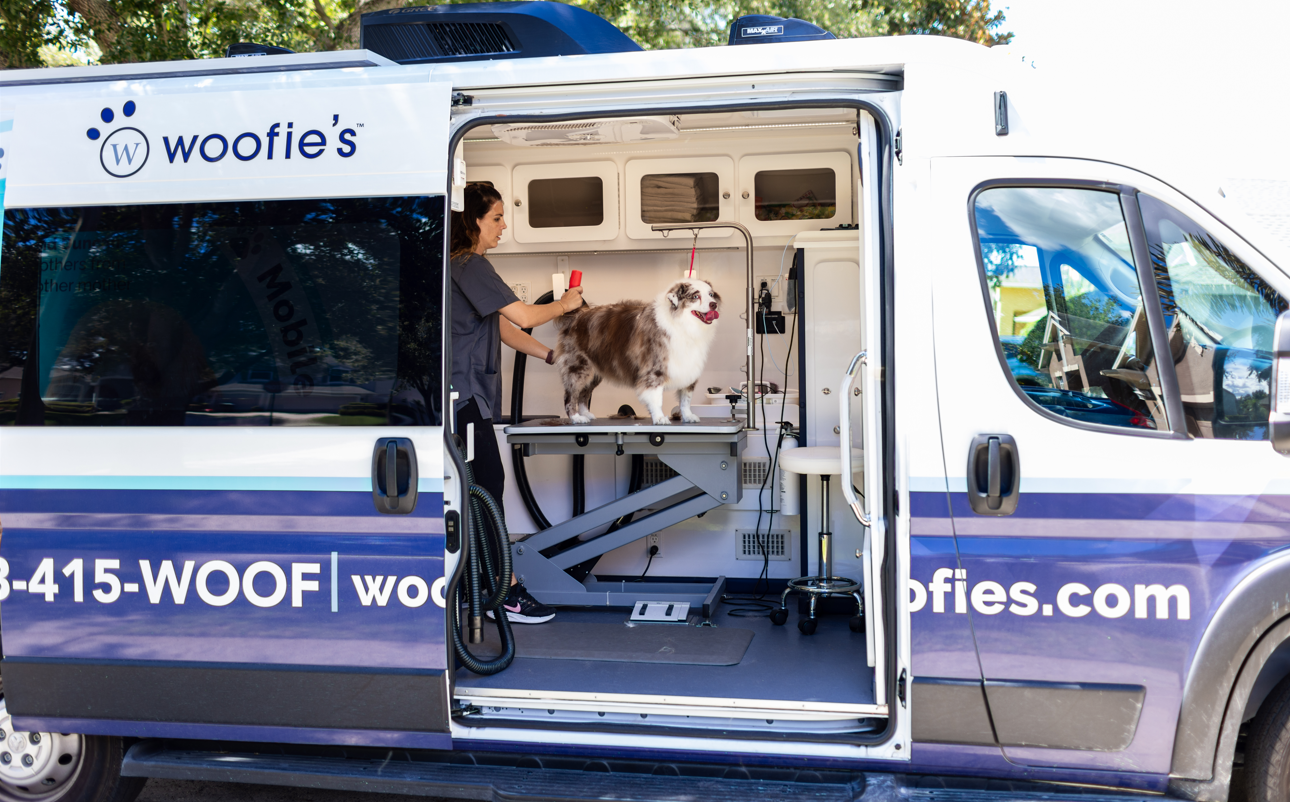
Finding the time to groom your dog can be a challenge. Between scheduling appointments and stressful car rides, it can feel like a chore. Woofie's brings the professional pet spa directly to your doorstep, making expert grooming convenient and stress-free.
Our certified and trained groomers provide one-on-one attention in a state-of-the-art mobile van, ensuring your dog receives calm, personalized care without ever leaving home. From breed-specific cuts and luxurious baths to de-shedding treatments and nail care, we handle it all.
Ready to give your dog the ultimate spa experience without the hassle? Book your Woofie's mobile grooming appointment online today and see the difference convenience and expert care can make.