

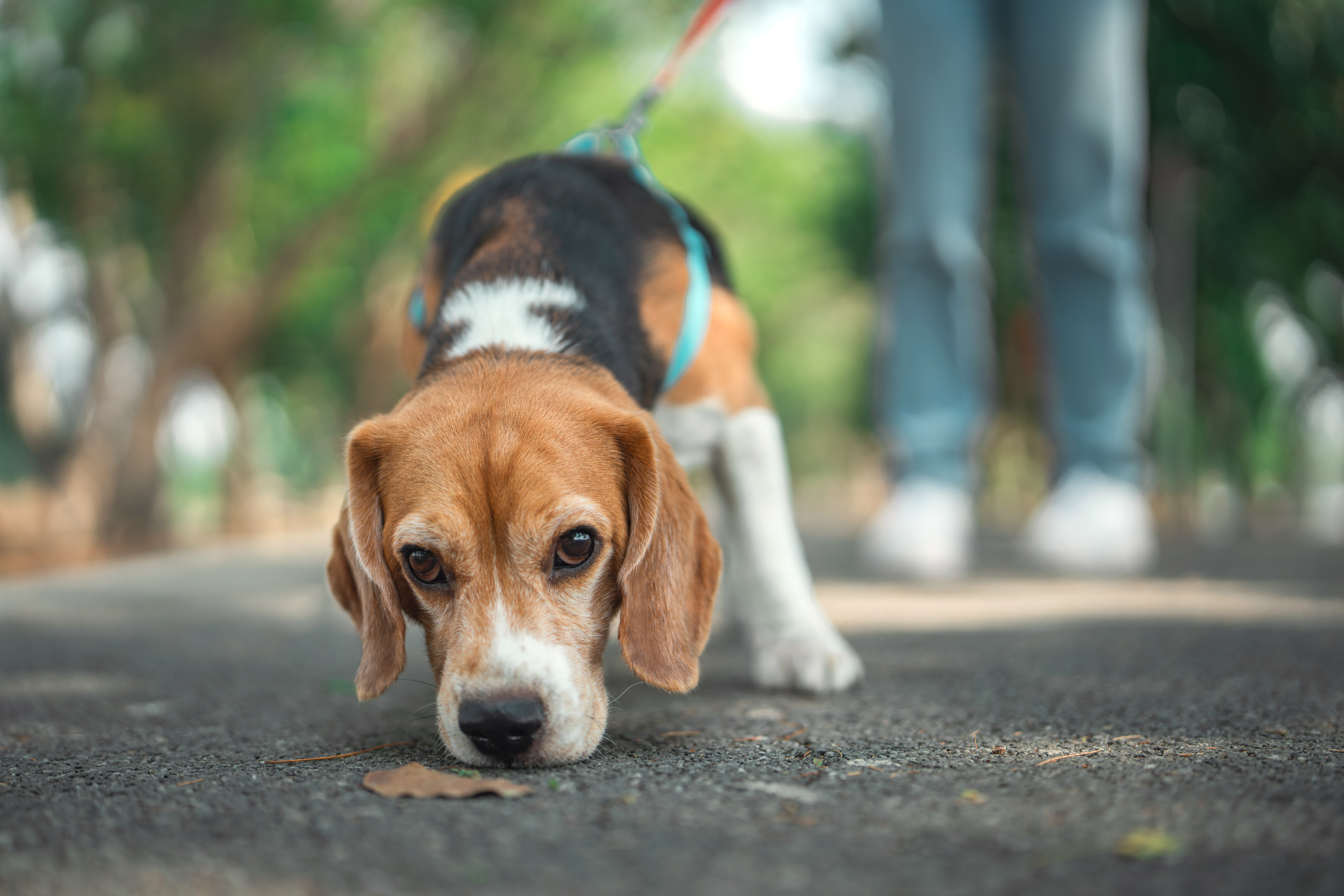
Why Dogs Sniff Everything: The Science of Scent
You take your dog for a walk, hoping to get some brisk exercise. Instead, you find yourself stopping every three feet so your furry friend can intensely investigate a seemingly invisible spot on the sidewalk. If you have ever felt frustrated by a walk that moves at a snail's pace, you are not alone.
But what exactly is your dog doing when they press their nose to the ground, a tree trunk, or another dog?
Dogs experience the world entirely differently than we do. While humans rely primarily on sight to understand their surroundings, dogs depend on their sense of smell. Sniffing is not just a quirky habit; it is a complex biological necessity. In this post, we will explore the fascinating science behind a dog's nose, see how their sense of smell compares to ours, and uncover the real reasons your dog needs to sniff on every walk.
The Science Behind a Dog's Nose
To truly understand why dogs sniff everything, we need to look at their anatomy. A dog's nose is a highly advanced piece of biological equipment designed specifically to gather and process chemical information.
Millions of Olfactory Receptors
Inside your dog's nasal cavity lies a complex maze of folded tissue. This tissue contains olfactory receptors, which are responsible for catching scent molecules. A human has roughly six million of these receptors. Depending on the breed, a dog can have up to 300 million. Bloodhounds, famous for their tracking abilities, boast the highest number of scent receptors in the canine kingdom.
Furthermore, the part of a dog's brain devoted to analyzing odors is proportionally 40 times larger than the same area in a human brain. When your dog inhales, a special fold of tissue inside their nostril separates the air. One path goes to the lungs for breathing, while the other goes directly to the olfactory area for smelling.
The Jacobson's Organ
Dogs also possess a hidden superpower: the vomeronasal organ, commonly known as the Jacobson's organ. Located at the bottom of the dog's nasal passage, just above the roof of the mouth, this organ serves a highly specialized purpose. It detects pheromones—the chemical signals released by other animals.
The Jacobson's organ has its own dedicated nerve pathways leading directly to the brain. This means a dog can simultaneously smell the physical scent of another animal and read their chemical pheromone signals without the two streams of information getting mixed up.
Dogs vs. Humans: The Smell Test
To put a dog's sense of smell into perspective, imagine a single drop of liquid. A human might be able to smell a drop of perfume in a small room. A dog, however, could detect that same drop of perfume in an enclosed stadium.
Alexandra Horowitz, a dog cognition researcher, provides another great analogy. She explains that if you make a cup of coffee, you smell the coffee. When a dog smells that same cup, they smell the water, the specific type of bean, the roast profile, the sugar, the milk, and the material of the cup itself. Dogs break down scents into their individual components. They do not just smell a passing breeze; they read a detailed chemical story about everything that the breeze has touched.
Why Do Dogs Sniff Exactly?
Knowing that dogs have a superpower in their snout helps explain why they use it so often. But what kind of information are they actually gathering when they drag you toward a fire hydrant?
Reading the Neighborhood News
When a dog sniffs a tree, a fence post, or a patch of grass, they are checking the local neighborhood message board. Dogs leave behind scent markers, usually through urine or feces, to communicate with other animals.
By sniffing these markers, your dog can determine a wealth of information about the dog who left it. They can tell the other dog's gender, health status, stress levels, and even what they ate for breakfast. They also figure out how long ago the other dog passed by. To a dog, sniffing a fire hydrant is exactly like scrolling through a social media feed.
Gathering Information About New Friends
When two dogs meet, they typically greet each other by sniffing rear ends. While humans might find this behavior rude or embarrassing, it is the most polite and effective way for dogs to introduce themselves. Anal glands produce strong, unique secretions that act like a biological calling card. By sniffing these areas, dogs learn everything they need to know about the new acquaintance, helping them decide if this new dog is friend or foe.
Calming Themselves Down
Sniffing is a naturally soothing behavior for dogs. When a dog engages in deep, focused sniffing, their heart rate actually decreases. If you notice your dog suddenly breaking off from a tense interaction with another dog to sniff the ground, they are likely doing a "sniff out." This is a displacement behavior designed to diffuse tension, calm their own nervous system, and signal to the other dog that they are not a threat.
Should You Let Your Dog Sniff on Walks?
Many owners view dog walks purely as physical exercise. We want to get our steps in, burn off the dog's energy, and head back inside. However, pulling your dog away from interesting smells deprives them of essential mental stimulation.
The Power of the "Sniffari"
Veterinarians and animal behaviorists heavily advocate for "sniffaris"—walks where the dog gets to set the pace and sniff as much as they want. Mental stimulation tires a dog out just as much, if not more, than physical exercise. Twenty minutes of intense sniffing can leave a dog more satisfied and exhausted than a fast-paced two-mile run.
Allowing your dog to sniff reduces their stress, builds their confidence, and provides essential enrichment. If you force a dog to march strictly at a heel without letting them investigate their environment, you deny them their primary way of experiencing the world.
How to Support Your Dog's Sniffing Habits
You do not have to abandon your own fitness goals to accommodate your dog's nose. You can easily find a healthy balance that keeps both of you happy.
Designate sniff breaks: Use a release cue like "go sniff" when you reach a grassy area, letting your dog know they have permission to explore.
Play scent games at home: Hide small treats around the living room and encourage your dog to "find it." This engages their brain and provides indoor enrichment.
Take a different route: Walking the same path every day gets boring. Take your dog to a new park or just walk down a different street to expose them to entirely new scent landscapes.
Invest in a snuffle mat: These fabric mats feature hidden pockets where you can hide kibble. They are excellent tools to satisfy your dog's foraging instincts during mealtime.
Your dog's nose is a marvel of nature. The next time you take your furry companion outside, remember that they are not just loitering by the bushes to annoy you. They are reading the news, learning about their neighbors, and engaging their highly evolved brains. Let them linger on that patch of grass a little longer. It might just be the best part of their day.
If your busy schedule makes it challenging to give your dog the walks they need, consider exploring our dog walking services. We provide free consultations to ensure the perfect match between your dog and their walker, and our app features GPS tracking so you can monitor their routes and join in on their adventures virtually.