

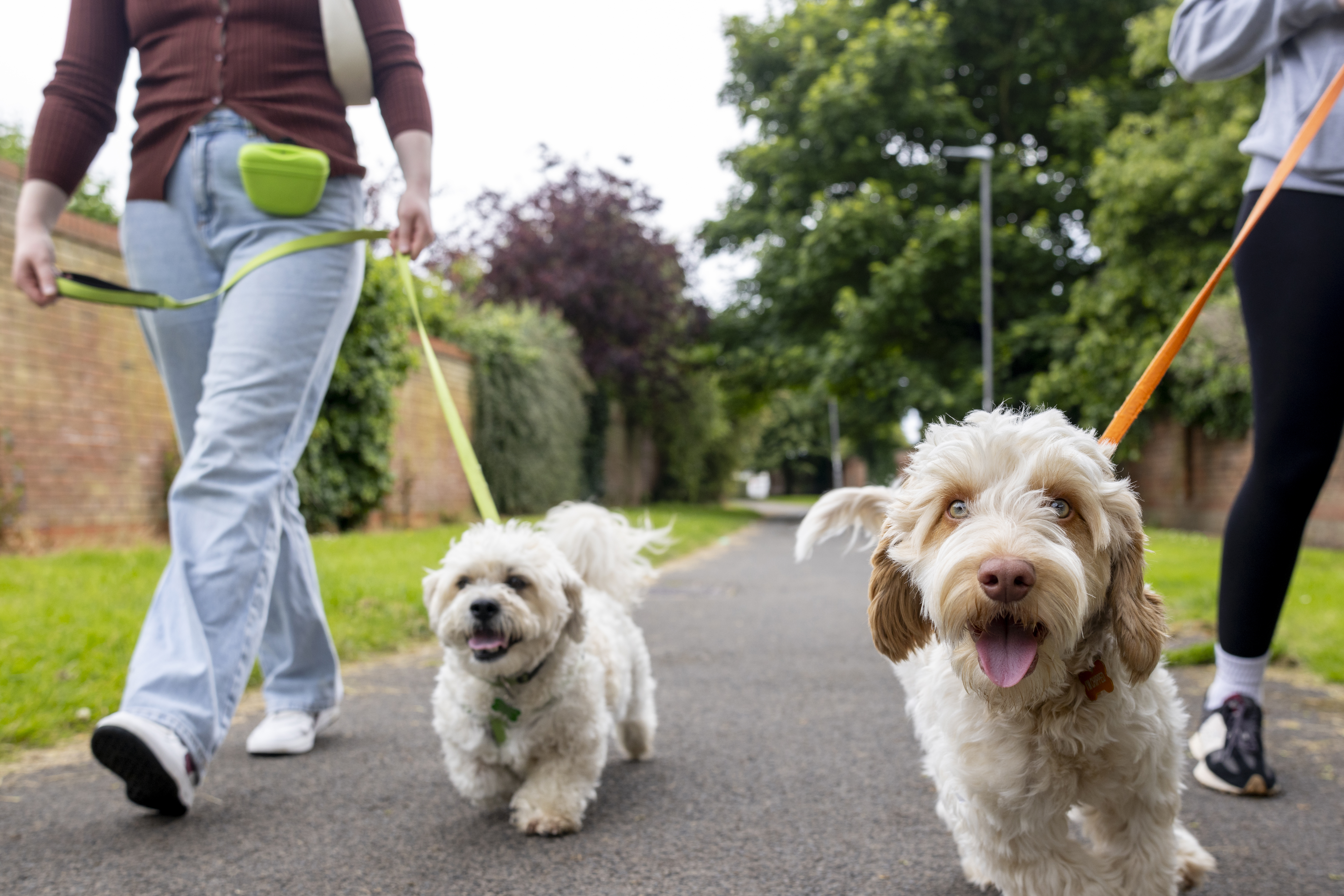
If you've ever found yourself Googling "how often should you walk your dog" at 11pm while your pup stares longingly at the leash, you're not alone. The truth is, there's no single answer that fits every dog. There is, however, a simple framework you can use to figure out what's right for yours.
The Short Answer
Most adult dogs need at least one walk a day, ideally split into two sessions of 20 to 30 minutes each. That said, factors like age, breed, size, and health can shift that number significantly. Some dogs thrive on quick daily strolls, while others need an hour or more of activity to stay happy and well behaved.
Walking Frequency by Life Stage
Puppies (under 1 year): Puppies have bursts of energy but tire quickly. A good rule of thumb is five minutes of walking per month of age, twice a day. So a 4 month old puppy would get about 20 minute walks. Exercising a growing puppy too much can put stress on developing joints, so shorter, more frequent walks are better than one long trek.
Adult dogs (1 to 7 years): This is where most dogs land in the "1 to 2 walks a day, 30 to 60 minutes total" range. High energy breeds like Border Collies, Labradors, and Australian Shepherds often need more, sometimes 60 to 90 minutes split across the day, to burn off mental and physical energy.
Senior dogs (7+ years): Older dogs still need regular movement to support joint health and mobility, but shorter, gentler walks are usually best. Two or three brief 10 to 15 minute walks often work better than one long outing.
It's Not Just About Time. It's About Energy Level
Two dogs of the same breed and age can have very different exercise needs. A good way to check if your dog is getting enough walking is to watch their behavior:
- Restlessness, chewing, or excessive barking can be signs of pent up energy.
- Calm, satisfied behavior after a walk usually means you've hit the right amount.
- Reluctance to walk or lagging behind could signal you're overdoing it, or that something else, like joint pain, needs a vet's attention.
Factors That Affect How Often You Should Walk Your Dog
- Breed and size: Working and herding breeds typically need more exercise than toy breeds or brachycephalic (flat faced) dogs like Bulldogs and Pugs, who can overheat quickly.
- Weather: Hot pavement and high humidity call for shorter, more frequent walks during cooler parts of the day.
- Health conditions: Arthritis, heart conditions, or recent surgery may mean shorter, more controlled walks.
- Mental stimulation needs: Walks aren't just physical. Sniffing, exploring, and encountering new environments help tire out a dog's brain, too.
The Bottom Line
Most dogs need at least one to two walks a day, but the right amount depends on your dog's age, breed, and energy level. Pay attention to their behavior, adjust for weather and health, and don't be afraid to bring in extra help on busy days. A well walked dog is a happier, healthier, and usually much better behaved companion.