


Quick Answer: Before hiring a dog walker, share your dog's routine, leash habits, and care needs. Confirm who will provide care, what the visit includes, how scheduling and home access work, and how you will receive updates. These details help you decide whether the arrangement fits your dog before the first walk.
Your meeting runs past noon, another starts in ten minutes, and your dog is waiting by the back door. When work keeps you away, a dog walker can give your dog a break outside. Woofie's of Frisco-McKinney offers a standalone dog walking service, with walks tailored to each dog and a GPS route map included in the visit journal afterward. Our team serves Frisco, McKinney, Prosper, Fairview, and Melissa. Here is what to share, ask, and prepare before the first visit.
Key Takeaways
- Identify when your dog needs a break and discuss the care that fits.
- Describe how your dog actually behaves on a leash, including pulling, reactions, and escape attempts.
- Ask who will walk your dog, what a visit includes, and what happens if your walker is out.
- Show the walker your dog's real leash and harness, and share entry details privately.
- Confirm weekdays, changes, weather, fees, and cancellation terms before you settle into a routine.
- With our team, the GPS route map comes in the visit journal after the walk. It is not live tracking.
What help does your dog need during your workday?
Start with when your dog needs care and what that care should include. A bathroom break, a slower sniffing walk, and a longer outing serve different needs.
Think through an ordinary weekday: when you leave, when your dog last goes outside, and when someone gets home. For pet parents in Frisco or McKinney, a commute along the Dallas North Tollway or US 75 can make that stretch longer than expected. If you are away for most of the day, discuss whether your dog needs more than one visit or a different care arrangement.
Tell our team what your dog enjoys and how they handle time at home. A senior dog may prefer a short, slow stroll. A younger dog may need a different pace or more frequent breaks. Your dog's usual routine gives us a useful starting point.
There is no single visit length or walking routine that fits every dog. Age, health, and individual needs matter. Ask your veterinarian about appropriate activity and bathroom breaks if you are unsure, especially for puppies, senior dogs, or dogs with a health condition.
What should you tell a new dog walker about your dog?
Describe what happens on an ordinary walk, including the difficult moments. Specific details help our team assess whether walking visits are a suitable fit and plan around your dog's needs.
Useful details include:
- Walking pace. Does your dog trot ahead, amble, or stop to sniff every mailbox?
- Familiar cues. Share the words you use, such as "wait" at the door, "leave it," or "this way."
- Reactions. Note how your dog responds to unfamiliar dogs, people, bikes, scooters, or delivery trucks.
- Pulling. Mention whether your dog pulls steadily, lunges at squirrels, or stops and refuses to move.
- Escape attempts. Flag door darting, backing out of a harness, or slipping through a side gate.
- Handling preferences. Explain how your dog feels about having a harness put on or paws wiped.
- Veterinary instructions. Pass along any walking limits your veterinarian has given, such as a slower pace or shorter outings.
The MSPCA-Angell's advice on finding a dog walker recommends sharing behavior risks, medical history, and any safe or unsafe walking areas before a walker starts.
The ASPCA's guide to dogs reactive on leash explains that barking and lunging can stem from fear or frustration. Describe the situations that trigger your dog's reactions, including how close another dog can get before your dog becomes uncomfortable.
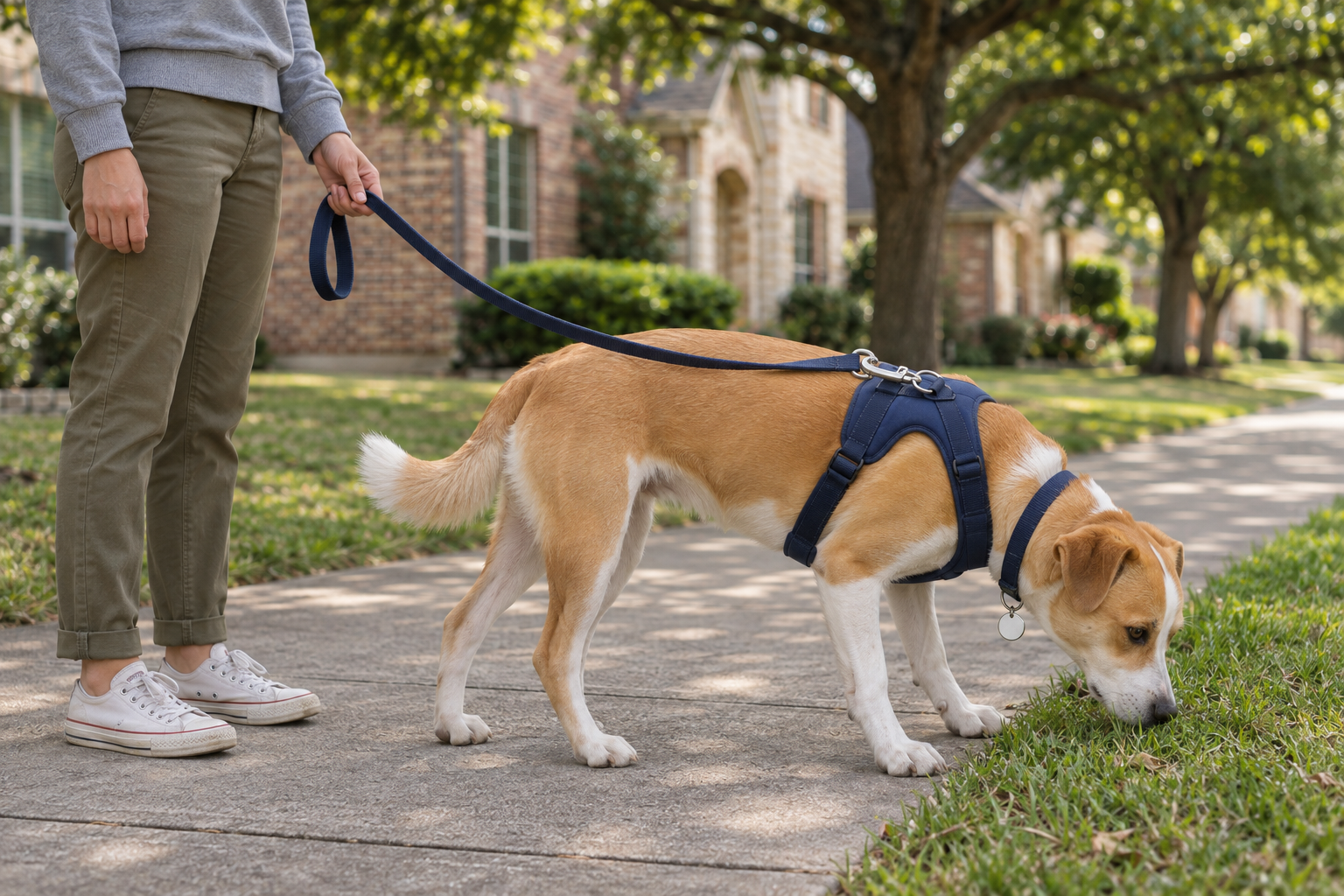
Some situations call for more than a walker. If your dog has bitten, if reactions are getting worse, or if a medical issue affects walking, talk with your veterinarian or a qualified behavior professional. Not every behavior or medical need fits every walking arrangement, and an honest conversation up front helps our team decide whether walking visits are the right support.
What should you ask before the first visit?
Before agreeing to a schedule, make sure you understand who will provide care and how the visits will work.
Bring these questions to your first conversation with our team:
- How does the introduction work? We offer a free consultation to learn about your dog's needs. A separate meet-and-greet with your walker is paid. Confirm how these are arranged and when you need to be home.
- Who will walk your dog? Ask who will provide care and whether you can meet them.
- How long are visits? Ask which lengths are available and how the time is divided between getting ready, walking, and settling your dog back inside.
- How does arrival work? Ask how visit timing is scheduled and what to expect on busy days.
- What does a visit include? Ask what happens besides the walk itself, such as fresh water or wiping paws.
- What if your usual walker is unavailable? Ask how a substitute is arranged and how you will know.
Also ask whether your dog will walk individually or with other dogs from your household. For more detail, read our guide: Do dog walkers walk multiple dogs at once?
How should you prepare equipment and home access for a dog walker?
Show the walker the leash, harness, or collar your dog actually uses, and walk through how you put it on. Then agree on secure entry and exit arrangements, and share access details privately.
Check that the equipment is in good condition. Show which attachment point you use and how you put the harness or collar on. Mention if your dog backs away while you buckle it or has slipped out before. If you are unsure about fit, ask for guidance before the first walk.
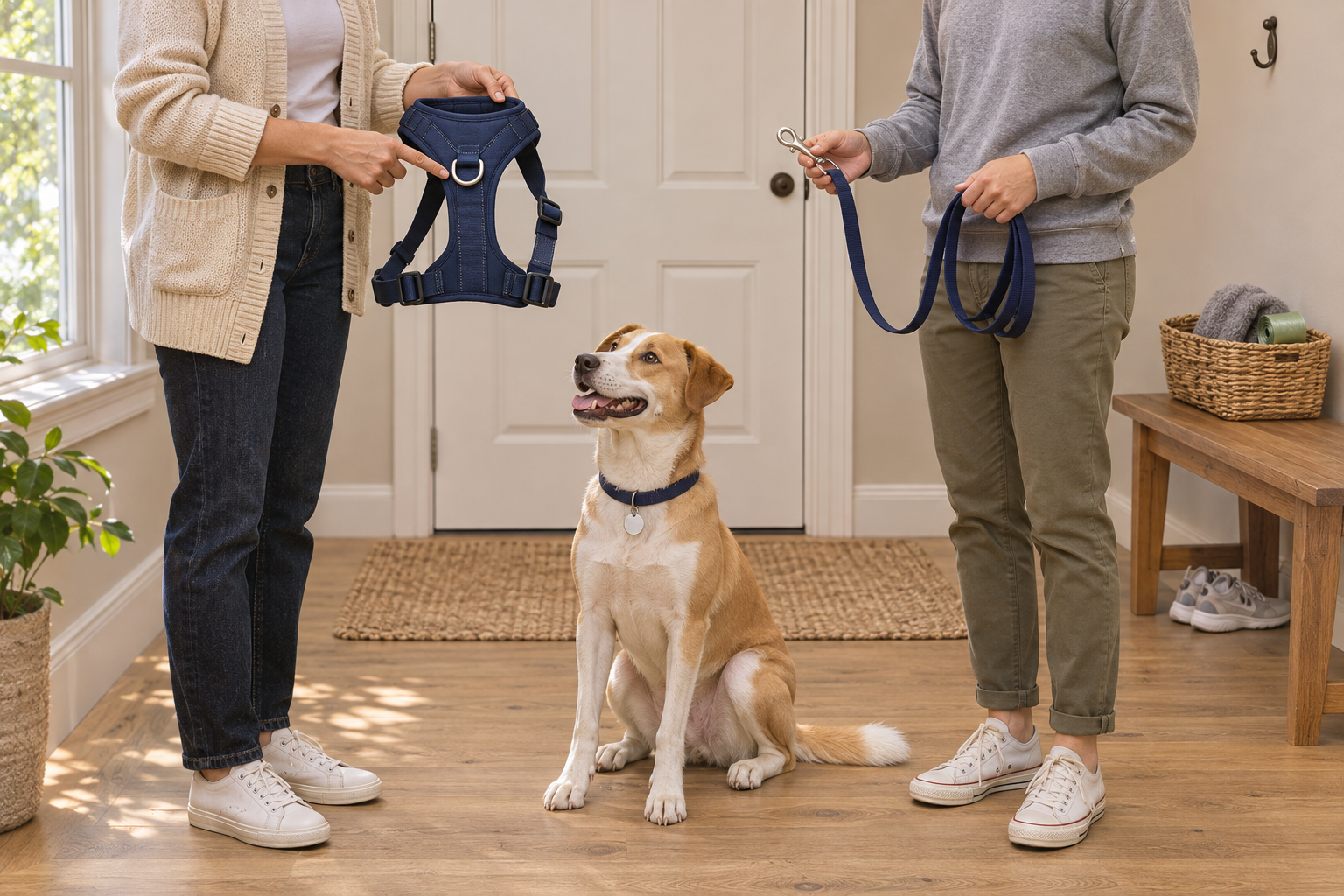
Next, show where things live and where they go back:
- The leash and harness, plus a spare if you keep one
- Waste bags and the right trash bin
- A towel for muddy or wet paws
- Any treats your dog is allowed, and any that are off limits
Check that your dog's ID tag and microchip registration have current contact details. Share your veterinarian's information and a backup contact, then agree on how the walker should reach you if a concern comes up during a visit.
Agree on a secure way to share entry instructions privately. Walk through how to lock up, where your dog should be after the visit, and whether other pets need to stay in a separate area. Confirm the arrangements with our team before anyone arrives.
What should you confirm about recurring walks and schedule changes?
Confirm the days you need and how to handle changes before recurring visits begin.
Recurring walks work best when they match your real week. If you work from home on Mondays and Fridays and drive in Tuesday through Thursday, you might only need those three days. Bring that pattern to the conversation.
Then confirm the details that tend to come up later:
- How to request a change, add a walk, or skip a day, and how much notice is needed
- What happens during unsuitable weather, from Texas summer heat to thunderstorms or the occasional icy morning
- Which fees apply to your arrangement and what the cancellation terms are
- How holidays affect your regular schedule
Confirm rates and cancellation terms in writing before visits begin. If you need care while traveling, our guide to pet sitter visits during vacation covers planning for time away from home.
What update will you receive after each walk?
Our GPS tracked dog walks include a visit journal with a map of your dog's route after each walk. The map documents the completed visit; it is not a live tracking feed.
Ask our team what other information the journal includes and how to contact us with questions about a visit.
Before your dog's first walk
Use this checklist to prepare for your first visit:
- Write down your weekday gap and which days need help.
- List your dog's pace, cues, pulling, reactions, and escape habits.
- Gather any walking instructions from your veterinarian.
- Ask how introductions, walker assignment, visit length, and substitutes work.
- Set out the leash, harness, waste bags, and towel in one spot.
- Check your dog's ID tag and microchip contact information.
- Share entry instructions privately and agree on how to lock up.
- Confirm changes, weather plans, fees, and cancellation terms.
Frequently Asked Questions
Do I need to be home for the first visit?
Start with our free consultation to discuss your dog's routine and care needs. A separate meet-and-greet with your walker is paid. Ask our team when you need to be home and confirm the introduction and access plan before the first walk.
Can I arrange recurring walks for only certain weekdays?
Tell our team which days you need, such as your in-office days. Ask about availability for that pattern and confirm the schedule before visits begin.
What should I tell a walker if my dog pulls or reacts to other dogs?
Describe exactly what happens, what sets it off, and what helps your dog settle. Share the cues and equipment you already use. If reactions are intense or your dog has bitten, talk with your veterinarian or a qualified behavior professional as well.
How will I know where my dog walked?
After each walk, you receive a visit journal with a GPS map of your dog's route. The map arrives after the visit and is not live tracking.
What if my schedule changes?
Give our team at least 24 hours' notice when canceling a dog walking visit. For other schedule changes, contact us as soon as your plans change and confirm any applicable terms. Check that the change has been acknowledged so you know it went through.
Final Thoughts
The first conversation is a chance to explain what a comfortable walk looks like for your dog, from their favorite sniffing spots to the situations they find difficult. Clear arrangements for visits, home access, and updates help everyone start with the same expectations.
Tell our team about your dog's routine and request dog walking service online, or call (469) 242-0892. Submitting a request does not confirm a booking. Our team will discuss the details and availability with you.