

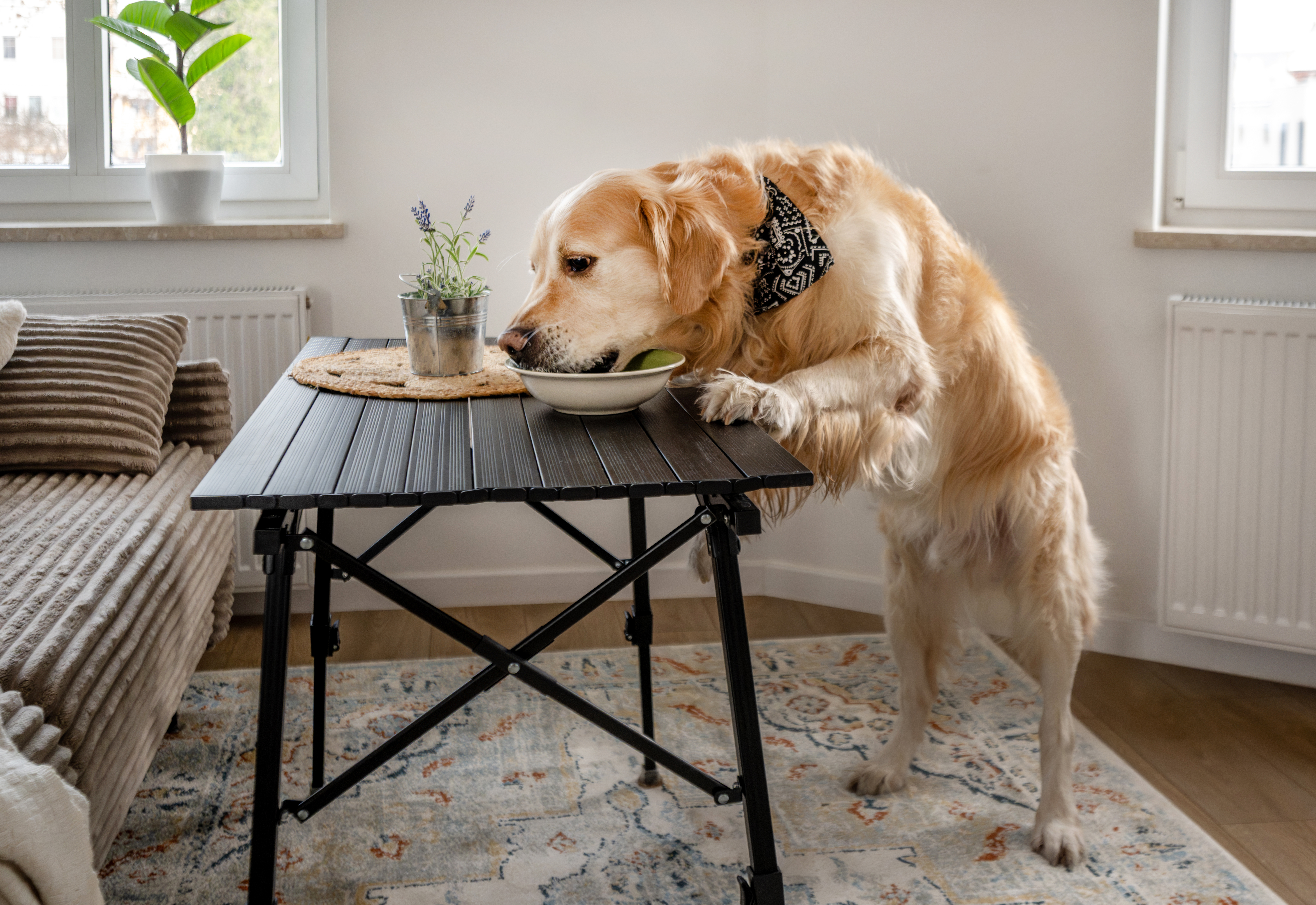
Healthy dog treats should come from whole, vet-approved foods like lean proteins, plain fruits, and vegetables — never from table scraps, which are often loaded with fat, salt, and seasonings that can harm your dog's health. Safe treats include blueberries, carrots, and plain cooked chicken, given in moderation using the 10% rule. Always avoid toxic foods like grapes, onions, and chocolate.
One little glance at your dog’s puppy-dog eyes and suddenly you're slipping a piece of pot roast under the table before you've even thought twice about it. We get it — sharing food feels like sharing love.
But here's the not-so-fun truth: those innocent table scraps can do a lot more damage than you'd think. Between the hidden fats, sneaky seasonings, and calorie overload, table scraps are one of the easiest ways to accidentally wreck your dog's diet — and waistline.
The good news? You don't have to choose between spoiling your pup and keeping them healthy. There's a whole world of nutritious, vet-approved dog treats that satisfy the craving to share without the health risks. This guide breaks down exactly why table scraps are a problem, which healthy dog treats to reach for instead, which foods to avoid altogether, and how much is actually safe to give.
By the end, you'll know exactly what to feed your dog instead of table scraps — and your pup will be none the wiser that their new favorite snacks are actually good for them.
Why Are Table Scraps Bad for Dogs?
Let's start with the obvious: dogs will eat almost anything you put in front of them. That doesn't mean they should.
Table scraps are usually leftovers from meals seasoned, cooked, and portioned for humans — not dogs. A buttery mashed potato or a greasy piece of bacon might taste like heaven to your pup, but their digestive system isn't built to process the same fat content, sodium levels, or spices that make human food so flavorful.
Here's what typically goes wrong when dogs eat table scraps regularly:
- Weight gain: Table scraps are often calorie-dense. A few bites here and there can add up to hundreds of extra calories a week — which, for a 20-pound dog, is the equivalent of a human eating several extra burgers.
- Digestive upset: Rich, fatty foods can trigger vomiting, diarrhea, or more serious conditions like pancreatitis, which occurs when the pancreas becomes inflamed from processing too much fat at once.
- Toxicity risks: Some common dinner-table ingredients — garlic, onions, grapes — are outright toxic to dogs, even in small amounts.
- Behavioral issues: Dogs that get scraps regularly often learn to beg, whine, or even steal food off counters and plates.
None of this means your dog has to miss out on treats entirely. It just means it's time to rethink what "treat" actually means.
The "Why": Choosing Whole-Food Treats Over Processed Snacks
So why go with whole-food treats instead of just picking up a bag of mass-produced dog biscuits — or worse, sharing your chips?
Whole, unprocessed foods like fruits, vegetables, and lean proteins offer real nutritional value: vitamins, minerals, fiber, and hydration, without the preservatives, fillers, or artificial flavors found in many processed snacks (human or canine).
Nutritional Benefits of Whole-Food Treats
- Lean proteins support muscle maintenance and provide essential amino acids without the saturated fat found in fattier cuts of meat.
- Fruits like blueberries and apples are rich in antioxidants and fiber, which support digestion and immune health.
- Vegetables like carrots and green beans are low in calories but high in nutrients, making them ideal for dogs who need to watch their weight.
Choose whole-food treats if your priority is long-term health and weight management over convenience. Choose commercial treats only when they're specifically formulated for dogs, free of artificial additives, and given in moderation alongside whole foods.
Unlike many processed treats, whole foods also let you control exactly what's going into your dog's body — no mystery ingredients, no guesswork. And because they're often lower in calories than fatty table scraps, they make guilt-free bonding moments far easier to come by.
Safe and Healthy Alternatives to Table Scraps
Ready for the fun part? Here's a categorized list of vet-approved whole foods you can swap in for table scraps — most of which your dog will love just as much (if not more).
Fruits Dogs Can Safely Enjoy
- Blueberries: Small, low-calorie, and packed with antioxidants. Great for training rewards.
- Apples (seedless, no core): A crunchy, fiber-rich treat — just remove the seeds first, since they contain trace amounts of cyanide compounds.
- Bananas: High in potassium, but best given in small slices due to natural sugar content.
- Watermelon (seedless): A hydrating, low-calorie summer treat.
- Strawberries: Rich in vitamin C and fiber, and a fun size for smaller dogs.
Vegetables Dogs Can Safely Enjoy
- Carrots: Crunchy, low in calories, and great for dental health (raw or cooked).
- Green beans: A popular weight-management treat recommended by many vets because they're filling but low in calories.
- Cucumber: Mostly water, making it a refreshing, hydrating snack.
- Pumpkin (plain, canned or cooked): Supports digestive health and is often used to help with mild stomach upset.
- Sweet potato (cooked, no seasoning): A fiber-rich alternative to processed starchy snacks.
Lean Proteins Dogs Can Safely Enjoy
- Plain cooked chicken (no skin, no seasoning): A lean, easily digestible protein source.
- Plain cooked turkey: Similar benefits to chicken, minus any gravy or seasoning.
- Boiled eggs: A protein-packed treat that also supports skin and coat health.
- Plain cooked salmon (boneless): Offers omega-3 fatty acids that support joint and skin health.
Homemade Dog Food and Treat Ideas
If you're looking to go a step further than occasional treats, homemade dog food is a great way to control exactly what your dog eats daily. Simple combinations like lean ground turkey, brown rice, and steamed carrots can form a balanced base meal when approved and portioned correctly by your veterinarian.
For treats specifically, consider freezing small portions of plain pumpkin puree in an ice cube tray, or baking thin slices of sweet potato into homemade "fries." These homemade dog food and treat options give you full control over ingredients while giving your pup something to get excited about.
Toxic Foods to Avoid Giving Your Dog
While plenty of human foods are safe in moderation, several common kitchen staples are genuinely dangerous for dogs — even in small quantities. Keep these far away from your dog's bowl, plate, or floor-based "emergency snack zone":
- Chocolate: Contains theobromine, which dogs can't metabolize effectively, leading to symptoms ranging from vomiting to seizures.
- Grapes and raisins: Linked to acute kidney failure in dogs, even in small amounts.
- Onions and garlic: Can damage red blood cells and lead to anemia over time.
- Xylitol (found in sugar-free gum and some peanut butters): Causes a rapid insulin release in dogs, which can lead to dangerously low blood sugar.
- Avocado: Contains persin, which can cause vomiting and diarrhea in dogs.
- Macadamia nuts: Known to cause weakness, vomiting, and tremors in dogs.
- Alcohol and caffeine: Both can cause serious toxic reactions, even in small doses.
If your dog accidentally eats any of these foods, contact your veterinarian or an animal poison control hotline immediately.
Portion Control: Understanding the 10% Rule
Even the healthiest dog treats can become a problem if you're overdoing it. That's where the 10% rule comes in — a simple, vet-recommended guideline that keeps treats from derailing your dog's diet.
The 10% rule states that treats should make up no more than 10% of your dog's total daily caloric intake, with the remaining 90% coming from a complete and balanced dog food.
Choose this guideline if your dog is at a healthy weight and you want to maintain it — it's a simple way to prevent treats from quietly adding up into weight gain. For dogs who are overweight or have specific health conditions, work with your veterinarian to determine a more tailored treat allowance.
Here's how it plays out in practice: if your dog's daily caloric needs are around 500 calories, treats should total no more than 50 calories per day. That might sound limiting, but whole foods like blueberries, green beans, and cucumber are naturally low-calorie, meaning you can give a generous handful without breaking the budget.
A good habit: before offering a treat, ask yourself whether it's filling an emotional need (yours or theirs) or an actual nutritional one. Treats are best used purposefully — for training, bonding, or an occasional reward — rather than a constant companion to every meal or moment.
Making Long-Term Health a Daily Habit
Swapping table scraps for healthy dog treats isn't about depriving your dog of joy — it's about redirecting that joy toward something that actually supports their long-term wellness. A handful of blueberries during training, a few slices of cucumber on a hot day, or a homemade pumpkin treat after a walk can become just as rewarding (for both of you) as sneaking food off your plate.
Small, consistent choices add up. Choosing whole foods over processed scraps, watching portion sizes with the 10% rule, and steering clear of toxic ingredients are simple habits that can meaningfully extend your dog's healthy years.
Want more tips like this delivered straight to your inbox? Sign up for our newsletter for weekly pet health tips, treat recipes, and product recommendations tailored to happy, healthy dogs.
Frequently Asked Questions
Are table scraps bad for all dogs, or just certain breeds?
Table scraps can be risky for dogs of any breed or size, though smaller dogs are especially vulnerable since even small amounts of fatty or toxic food represent a larger percentage of their body weight.
What is the healthiest treat I can give my dog every day?
Low-calorie whole foods like carrots, green beans, and blueberries are considered some of the healthiest daily treat options because they're nutrient-dense without being calorie-heavy.
Can I make homemade dog food instead of relying on treats?
Yes. Homemade dog food made from lean proteins, vegetables, and dog-safe grains can be a healthy option, but it should be formulated with guidance from a veterinarian to ensure it's nutritionally balanced.
How do I know if my dog has eaten a toxic food?
Common symptoms include vomiting, diarrhea, lethargy, tremors, or unusual behavior. If you suspect your dog has eaten a toxic food like chocolate, grapes, or onions, contact your veterinarian or an animal poison control hotline immediately.
Is it ever okay to give my dog table scraps?
Plain, unseasoned pieces of lean meat or dog-safe vegetables served occasionally in small amounts are generally considered safer than fatty, seasoned leftovers. When in doubt, stick to known dog-safe whole foods instead.