


A North Texas Guide for Heavy Shedding and Double Coats
If it feels like your dog is leaving a second dog behind on your floors, you are not imagining it. During warmer months, many heavy-shedding and double-coated dogs release more of their undercoat. Regular brushing at home helps, but it may not remove the loose coat packed beneath the healthy outer coat.
Woofie's of North Fort Worth offers a three-step professional de-shedding treatment as an optional grooming add-on. It is designed to loosen and remove dead undercoat, dirt, and dander while preserving the healthy topcoat. That means more loose fur is removed in the grooming van and less is left around your home.
The Three-Step De-Shed Treatment
A professional de-shedding treatment goes beyond a quick surface brush-out. Each step works through the coat so loose undercoat can be removed without routinely shaving the protective outer coat.
1 Dry Coat Blowout and Coat Check
We begin with a high-velocity blowout on the dry coat to lift away loose undercoat, dirt, and dander. The groomer also checks the coat's condition and identifies areas where undercoat is packed or tangled.
2 Coat Release Bath
Next, the dog receives a thorough bath using Best Shot Ultra Wash and Ultra Plenish Conditioner. These professional Coat Release products help loosen trapped undercoat while cleansing and conditioning the coat.
3 Finishing Blowout and Brush Out
After the bath, we dry and brush the coat to remove the remaining loose undercoat. We finish with Best Shot Ultra Vitalizing Mist to condition and refresh the coat.
Should You Shave a Double Coated Dog
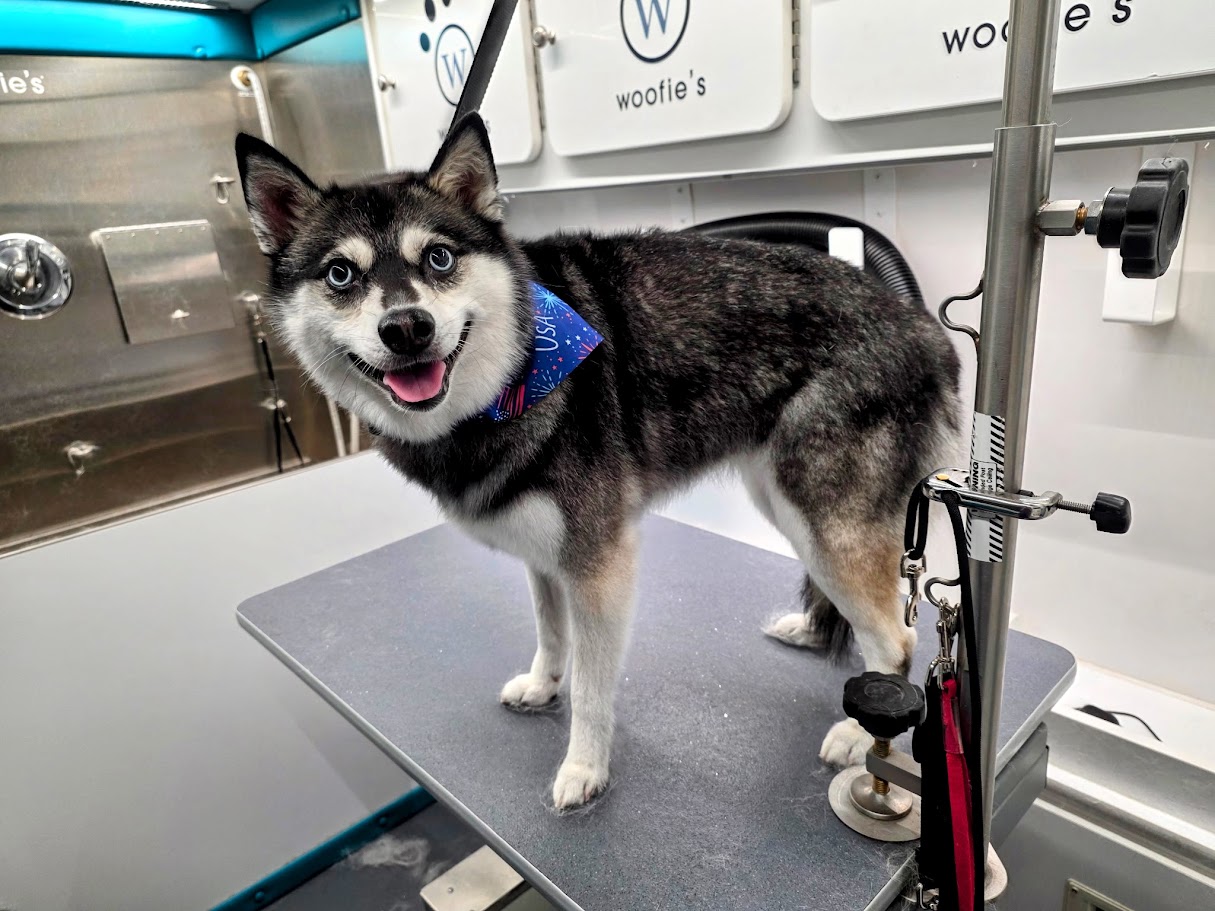
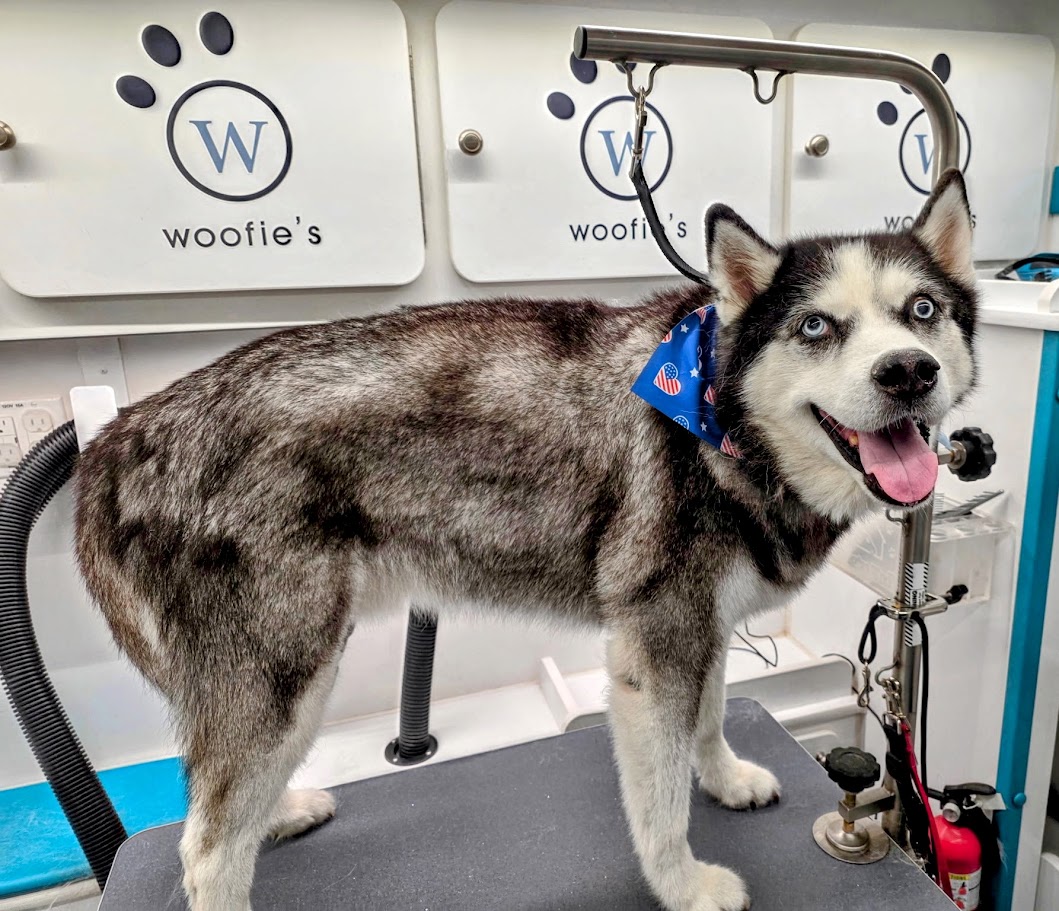
For most healthy double-coated dogs, routine shaving is not the best way to control shedding. Breeds such as Huskies, Golden Retrievers, Labrador Retrievers, German Shepherds, Australian Shepherds, Great Pyrenees, Corgis, and Bernese Mountain Dogs rely on both layers of their coat for insulation and skin protection.
Shaving can expose the skin to sun and may change how the coat grows back. A professional de-shedding treatment removes loose undercoat while leaving the healthy protective coat in place. Medical needs, severe matting, and individual coat conditions can require a different approach, so your groomer or veterinarian should guide those decisions.
How Often Does a Dog Need De-Shedding
The right schedule depends on breed, coat condition, season, health, and the amount of brushing performed at home. Some dogs need extra help when they blow their seasonal coat, while year-round shedders may benefit from de-shedding as part of a regular grooming schedule. Your groomer can recommend an interval after evaluating the coat in person.
Mobile De-Shedding in North Fort Worth
Woofie's brings one-on-one mobile grooming directly to your driveway. Your dog receives the groomer's attention in a clean, climate-controlled mobile pet spa without a car ride, cage, or long wait alongside other pets. We serve families throughout North Fort Worth, Haslet, Saginaw, Watauga, the Alliance area, and surrounding communities.
Frequently Asked Questions
Does de-shedding stop shedding completely?
No. Shedding is a normal process, and no treatment can stop it completely. Professional de-shedding removes loose undercoat and can reduce the amount of fur released around the home between appointments.
Is de-shedding only for long-haired dogs?
No. Many short-haired and medium-coated breeds shed heavily. The groomer will evaluate the coat and recommend the service when it is appropriate for that dog.
Can I add de-shedding to a mobile grooming appointment?
Yes. Ask the Woofie's of North Fort Worth team whether the three-step de-shedding treatment is appropriate for your dog's coat and current grooming service.
Request your dog's next mobile grooming appointment through Woofie's.